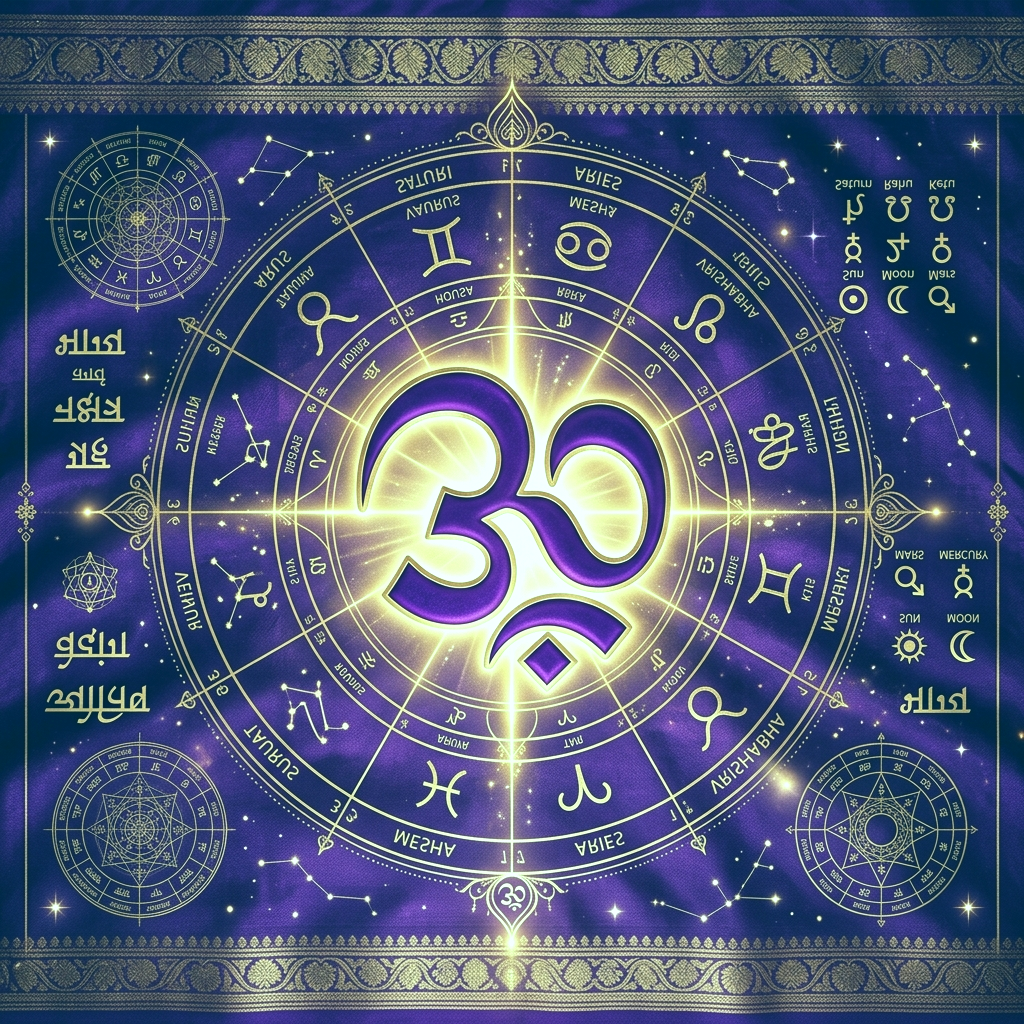
The sky does not merely house the twelve signs of the Rashi. Beneath the familiar zodiac lies a more ancient, more granular map of the celestial influence. The twenty-seven Nakshatras represent the true lunar heartbeat of Vedic astrology. They are the mansions where the Grahas rest, drawing their specific qualities from the subtle vibrations of the stars. Each Nakshatra spans thirteen degrees and twenty minutes of the ecliptic. A map of the soul in segments.
Ashwini initiates the journey. It is the head of the cosmic horse, ruled by the Ketu, sparking sudden impulses and rapid healing. Here, the energy is raw and untethered. Bharani follows, governed by Venus and the deity Yama. It represents the crucible of life and death, where seeds germinate in the darkness of the womb. Restraint and intense desire define this space.
Krittika marks the threshold of the fire element. Ruled by the Sun, it demands purification through burning. It cuts through illusion with the sharp blade of Agni. This is the domain of leaders and those who provide heat to the world. Rohini, the favorite of the Moon, brings the beauty of growth and the danger of attachment. It is the most fertile point in the entire zodiac.
The Rhythms of the Lunar Mansions
Mrigashira wanders in search of the elusive. Ruled by Mars, it is the hunter seeking the deer, a constant quest for knowledge or sensory pleasure. Ardra brings the storm. Rudra, the lord of the tempest, cleanses the atmosphere through sorrow and sudden release. It is a necessary disruption. Punarvasu returns the light. Aditi, the mother of the gods, ensures the cycle of renewal remains unbroken. It is the gift of the second chance.
Pushya stands as the pinnacle of nourishment. Governed by Brihaspati, it offers the wisdom of the teacher and the protection of the elder. It is the most auspicious of the mansions, yet it demands a high moral standard from those who reside within its influence. Ashlesha, the serpent, coils beneath the surface. Ruled by Mercury and the Nagas, it possesses a deep, piercing insight that often feels uncomfortable. Control is the primary lesson here.
Magha connects the individual to the lineage. Pitris, the ancestors, reside in this space of power and authority. It is the royal throne, demanding respect for the past. Purva Phalguni brings the joy of recreation and the grace of Venus. It is the time for leisure and the fruition of previous efforts. Uttara Phalguni completes the cycle of social duty. It is the bridge between personal desire and communal contribution.
Do you feel the weight of your own Lagna pressing against these constellations?
Hasta is the hand of creation. Guided by the Sun and the Moon, it turns thoughts into tangible reality. It is the skill of the craftsman. Chitra, the jewel of the sky, shines with the brilliance of Vishwakarma. It is the architect of the zodiac, obsessed with form and aesthetic perfection. Swati moves like the wind. Independent and restless, it seeks balance amidst constant change.
Vishakha offers the goal. It is the fork in the road where the spirit decides its path. Anuradha creates friendship. It is the lotus in the mud, maintaining purity despite the surrounding chaos. Jyeshtha carries the burden of seniority. It is the eldest, the one who carries the weight of the family name and the secret burdens of the community.
Integration of Dasha and Bhavas
The Dasha system relies entirely on the Nakshatra occupied by the Moon at birth. This is the primary timer of life. It dictates the sequence of experiences, governing the unfolding of the Bhavas. A planet located in a specific Nakshatra changes its character entirely. Mars in Ashwini acts differently than Mars in Jyeshtha. One rushes toward the battle, while the other calculates the cost of the victory.
Mula sits at the root. Ketu rules this junction, where the material world ends and the spiritual begins. It destroys the false to reveal the truth. Purva Ashadha represents the water of the ocean, unconquerable and vast. It is the spirit of ambition that refuses to be contained. Uttara Ashadha brings the victory that comes through focus. It is the final consolidation of power.
Shravana listens to the echoes of the universe. It is the mansion of learning and tradition, where the secrets of the ancients are passed down through the ear. Dhanishta plays the drum of time. It is the rhythm of wealth and the gathering of resources. Shatabhishak heals with a hundred medicines. It is the physician of the zodiac, searching for the cure to complex ailments.
Purva Bhadrapada carries the intensity of the dual-faced transformation. It is the fire of the funeral pyre and the wisdom of the sage. Uttara Bhadrapada brings peace after the struggle. It is the cosmic serpent supporting the world, ensuring that balance is maintained through deep reflection. Revati completes the circle. It is the shepherd of the souls, guiding them toward the final liberation of the journey.
The Influence of Divisional Charts
The Rashi is merely the surface. To see the deeper narrative, one must consult the divisional charts. The Navamsha, or D-9 chart, reveals the strength of the Grahas within their Nakshatras. It shows the internal strength of the soul. If a planet is strong in the Rashi but weak in its Nakshatra, the external success is hollow. If the Nakshatra is strong, the internal resolve remains firm despite external adversity.
Upagrahas often hide in the gaps between these mansions. They act as invisible levers, tipping the balance of a chart when the major Grahas are quiet. They add color to the personality and complexity to the fate. Every chart is a layered tapestry, woven by the threads of these twenty-seven stations.
Yogas form when the influence of these Nakshatras combines across different Bhavas. A planet in a Kendra, when placed in a favorable Nakshatra, creates results of great magnitude. Conversely, a planet in a Dusthana, even if well-placed by sign, struggles to overcome the inherent weakness of its Nakshatra. The placement is the key to the lock.
Observe the movement of the sky tonight. The Moon will transit a mansion, changing the quality of the atmosphere for the entire world. It acts as a mirror for the collective consciousness. Individuals respond to these shifts in ways they rarely perceive. The anger, the sudden love, the urge to retreat, or the desire to conquer are often just echoes of the lunar mansion being crossed.
Patterns emerge when one stops looking at the signs as static boxes. They are fluid, moving, and breathing expressions of time. The Nakshatras are not just points in the sky. They are the rooms of the cosmic house. To understand where the spirit resides is to understand the nature of the current experience. Everything rests in its appointed place.
The stars do not force; they suggest. The individual remains the captain of the vessel, but the Nakshatras dictate the currents of the ocean. Knowledge of these currents allows for navigation, not by fighting the tide, but by moving with the flow of the celestial design. The sky remains silent, watching the cycles complete themselves in the quiet darkness of space.