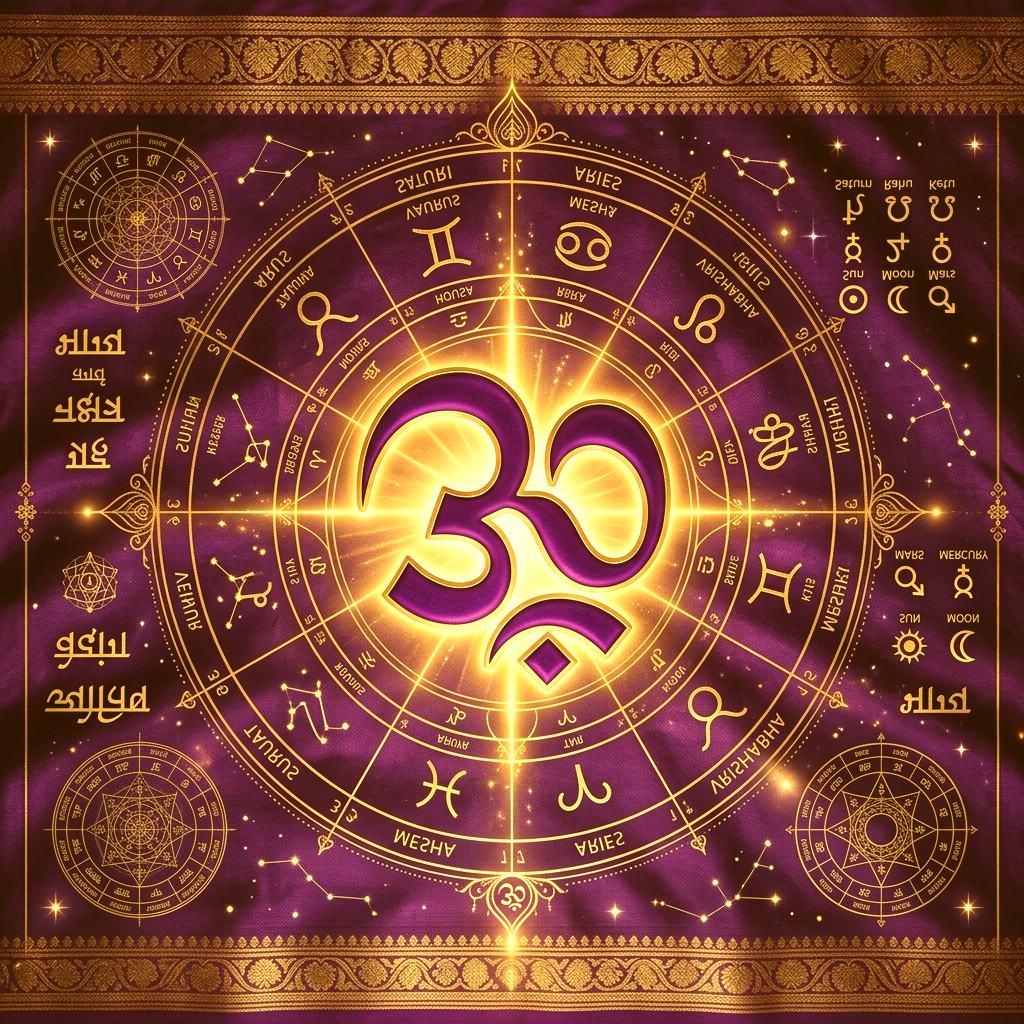
The sky does not change, yet the eyes that view it remain tethered to divergent traditions. Western astrology gazes upon the tropical zodiac, a seasonal construct anchored to the vernal equinox. It maps the psyche through the lens of the changing seasons. Vedic astrology, known as Jyotisha, looks toward the sidereal heavens. It anchors the chart to the actual positions of the constellations. A fixed point in the vast expanse. This subtle shift in measurement alters every calculation that follows.
Western systems prioritize the Sun as the primary indicator of the core self. Jyotisha elevates the Lagna, or the rising sign, as the singular gatekeeper of the life path. The Lagna dictates the sequence of the Bhavas, or houses, and determines the strength of the Grahas. Without a precise birth time, the map remains blurry. A ghost of a destiny. The rising sign serves as the anchor for the soul, revealing the physical vessel and the primary trajectory of the current incarnation.
The Rashi positions in the sidereal zodiac often pull planets back by nearly twenty-four degrees. A Sun sign commonly cited in Western horoscopes frequently shifts into the previous sign under Vedic analysis. This is not a dispute of validity. It is a difference in the starting point of the coordinate system. One relies on the rhythm of the Earth against the Sun. The other relies on the permanent geometry of the stars.
Consider the Moon. In Vedic practice, the Moon holds a status equal to or greater than the Sun. It represents the mind, the emotional landscape, and the reception of karmic patterns. The Nakshatras, or lunar mansions, provide a granular level of detail that Western systems rarely touch. These twenty-seven segments of the sky reveal the specific temperament of the individual. They offer a deep look into the hidden motivations of the spirit.
Wait, if the positions shift so significantly, does the personality change entirely?
The individual remains the same, but the language of interpretation shifts. Jyotisha focuses on the karmic debt and the timing of experiences. It is a predictive science at its core. The Dasha system provides a clock for the life cycle. It calculates the sequence of periods governed by specific planets. One might enter a phase of Saturn, then Mercury, then Ketu. These periods act as chapters in a book, each defined by the influence of the ruling Graha. The Dasha reveals why certain events occur at specific times, rather than simply describing the nature of the person.
Yogas emerge from the specific interaction of the Grahas within the Bhavas. These combinations create specific outcomes. Wealth, poverty, spiritual attainment, or public renown. A Yoga acts as a concentrated force. It defines the potential of the life map. Some Yogas promise great power, while others suggest a life of intense seclusion. These are not mere tendencies. They are structural realities written into the chart at the moment of the first breath.
The use of divisional charts provides another layer of specificity. A single Rashi chart is rarely enough for a complete reading. One must examine the Navamsha, or the D-9 chart, to understand the deeper strength of the planets and the nature of the soul. Other charts, such as the D-10 for professional life or the D-7 for progeny, offer a microscopic view of specific life areas. This depth distinguishes the Vedic approach. It does not generalize. It dissects.
Upagrahas add further nuance. These shadow points, derived from the mathematical relationship between the Sun, the Moon, and the planets, exert subtle pressures. They act as invisible hands. They can amplify or diminish the effects of the primary Grahas. Their presence demands a high level of precision. A chart without these considerations is like a map missing the elevation lines.
Western astrology often emphasizes psychological exploration. It seeks to explain the “why” of behavior. It acts as a diagnostic tool for the ego. Jyotisha operates with a different intent. It seeks to illuminate the “what” of destiny. It identifies the karmic conditions that manifest as life events. It addresses the reality of the individual within a grand, unfolding drama of time. The focus remains on the fulfillment of duty and the navigation of predetermined cycles.
The planets themselves are viewed as living deities in the Vedic tradition. They possess consciousness. They demand respect. They are not merely cold rocks orbiting in a vacuum. A Graha is a force that seizes or holds. It takes hold of the mind. It exerts influence on the physical world. Propitiation becomes an active part of the practice. Remedies, or Upayas, allow the individual to mitigate the harsh effects of a difficult transit or a challenging Dasha. Mantras, gemstones, and charitable acts serve as corrective lenses for the soul.
A Western chart might describe a person as communicative and analytical. A Vedic chart, using the same birth data, might point to a specific Nakshatra that drives that person toward linguistic mastery or technical obsession. The Vedic practitioner looks for the source of the trait. Is it a planet in its own sign? Is it the influence of a malefic on a Kendra house? The logic follows a strict lineage of cause and effect.
The calendar of the sky governs the life of the observer. Jyotisha respects the lunar cycle above all. The phases of the Moon determine the auspiciousness of an endeavor. New beginnings, travel, and marriage are timed to align with the lunar energy. This creates a rhythm of life that is inherently connected to the pulse of the cosmos. It is not an arbitrary schedule. It is a reflection of the celestial breath.
Some might argue that the difference is merely semantic. This ignores the vast gulf between a system based on symbols and a system based on the physical alignment of stars. The constellations are the alphabet of the universe. The Western system translates them into a seasonal metaphor. The Vedic system treats them as the literal source of light and instruction. Both hold value, but they speak different dialects.
The complexity of Vedic astrology requires a disciplined mind. One must master the interplay of the Bhavas, the dignity of the Grahas, and the precise timing of the Dasha. It is a rigorous path. It leaves little room for ambiguity. When a planet enters a state of debilitation, the effect is specific. When it reaches exaltation, the result is measurable. This consistency draws the seeker who desires clarity over comfort.
The stars do not lie, though they may remain misunderstood. The charts provide a template for the journey, not a final verdict on the worth of the traveler. Every life contains both light and shadow. The Grahas distribute these in varying degrees of intensity. The wisdom of the tradition lies in the recognition of these cycles. It is the ability to stand within the storm and understand the direction of the wind.
The sky remains consistent in its silent observation of the Earth. Whether the system relies on the tropical or the sidereal, the patterns repeat. The dance of the planets continues, indifferent to the labels applied by those who watch from below. The observer simply notes the position, the timing, and the influence. The cycle completes, and the next begins.