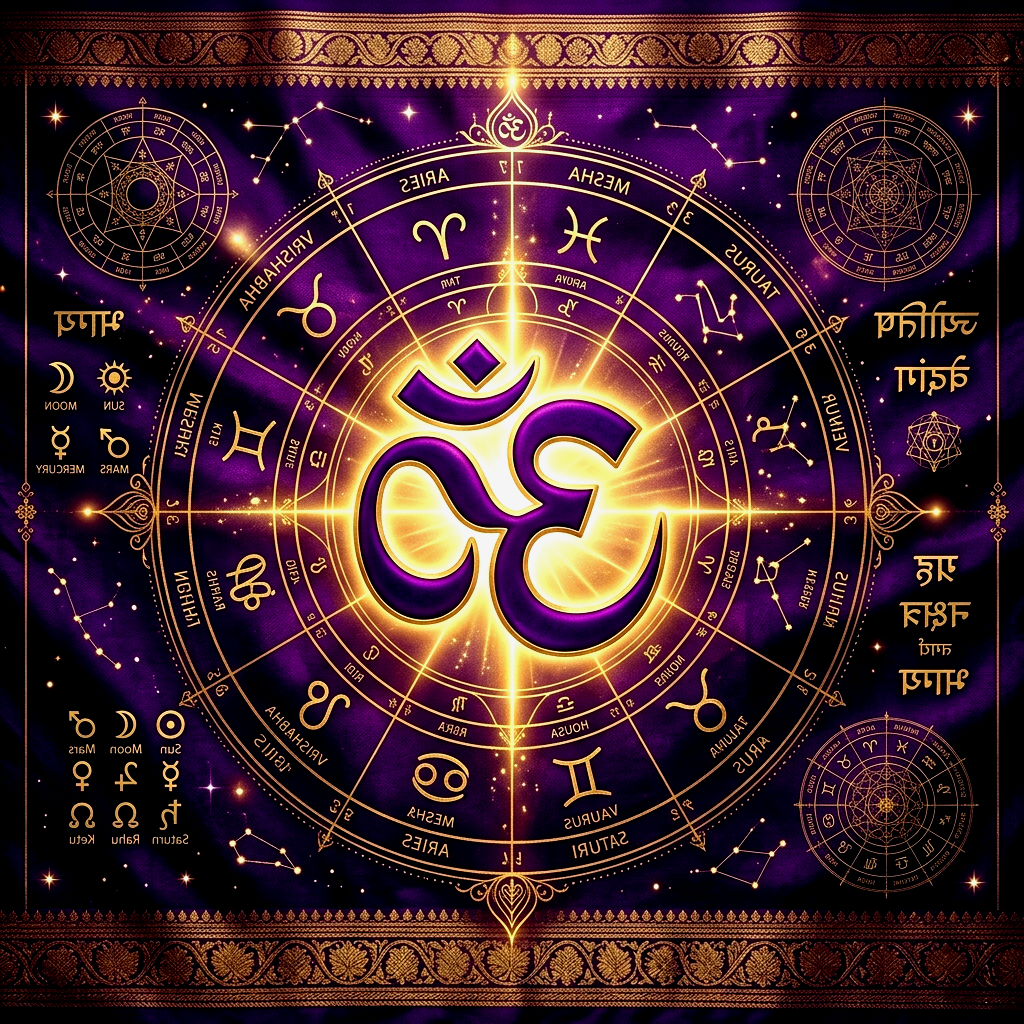
The birth chart serves as a frozen map of the sky at the exact moment of breath. It is a snapshot of karma manifesting in material form. To read it, one must look past the surface of the symbols and observe the interplay between the Grahas and the Bhavas. The Lagna, or Ascendant, remains the primary anchor. It dictates the entire orientation of the life experience.
Every chart begins with the Rashi, the zodiac sign rising at the eastern horizon. This sign determines the physical appearance, the temperament, and the basic approach to existence. If the Lagna falls in a fiery sign, the life path burns with initiative. If it falls in a watery sign, the internal tides dictate the flow of events. Observe the placement of the Lagna Lord. Its position in a specific Bhava reveals where the individual directs their primary energy.
Consider the Grahas, they’re the active agents of the chart. The Sun represents the soul and the father, while the Moon governs the mind and the mother. Mars provides the drive, Mercury the intellect, Jupiter the wisdom, Venus the desires, and Saturn the lessons of endurance. Their dignity depends on the sign they occupy. A Graha in its own sign or exaltation strengthens the house it inhabits. Conversely, a debilitated planet creates a struggle that often demands a lifetime of refinement.
Understanding the Bhavas and the Dasha Cycle
Twelve Bhavas divide the chart into specific areas of life. The first house is the self, the second is wealth, the third is courage, the fourth is home, the fifth is intelligence, the sixth is debt and conflict, the seventh is partnership, the eighth is hidden depths, the ninth is fortune, the tenth is status, the eleventh is gains, and the twelfth is liberation. Each house acts as a field of activity.
Do you find your mind wandering back to the empty houses? Do not be misled by the absence of planets. An empty house is simply governed by the sign on its cusp and the placement of that sign’s lord. The lord of the house travels to another location in the chart, carrying the energy of that house with it. This is the primary way to trace the flow of karma.
The Dasha system provides the temporal sequence. Vimshottari Dasha tracks the unfolding of the Grahas over time. It dictates the rhythm of the life experience. A period ruled by a strong planet brings expansion in the house it governs. A period ruled by a difficult planet brings tension and necessary correction. The Mahadasha sets the tone, while the Antardasha provides the specific flavor of the events.
The Subtle Influence of Nakshatras
The zodiac is further divided into twenty-seven Nakshatras. These lunar mansions provide the granular detail of the personality. While the Rashi shows the broad strokes of character, the Nakshatra reveals the underlying motivation. Every planet resides in a specific Nakshatra. This position determines the quality of the planet’s expression. A planet might be strong by sign but weak by Nakshatra. Such nuances define the difference between outward success and internal satisfaction.
Each Nakshatra is associated with a deity and a planetary ruler. These associations color the interpretation. When a planet sits in a Nakshatra ruled by a malefic, the experience of that planet becomes sharp and demanding. When it sits in a Nakshatra ruled by a benefic, the experience softens. The Nakshatra is the heartbeat of the chart.
Detecting Yogas and Divisional Charts
Yogas are specific combinations of planets that produce particular outcomes. Some Yogas promise wealth, others promise fame, and some promise spiritual liberation. A Raja Yoga, for instance, occurs when the lords of angular houses connect with the lords of trinal houses. These combinations signal high achievement. However, Yogas only manifest when the Dasha of the involved planets arrives. The potential lies dormant until the timing is correct.
Divisional charts offer a deeper look. The Rashi chart is merely the entry point. The Navamsha, or D-9 chart, provides the true strength of the planets. It acts as the fruit of the tree. If a planet is strong in the Rashi chart but weak in the Navamsha, its promised benefits may never ripen. The D-10 chart reveals the professional trajectory. The D-7 chart describes the nature of progeny. Use these charts to verify the strength of the promises made by the primary chart.
You may be wondering how to reconcile conflicting signs.
The Role of Upagrahas and Shadow Points
Don’t ignore the shadow points, rahu and Ketu are the nodes of the Moon. They’re the points of intersection between the lunar and solar paths. Rahu represents obsession, worldly desire, and the hunger for the new. Ketu represents detachment, spiritual insight, and the release of the old. Their axis is the primary karmic axis of the chart. Where they fall reveals the area of life where the individual must learn to balance material gain with spiritual surrender.
Upagrahas are secondary points that add depth to the analysis. Mandi and Gulika are particularly major, they represent the darker aspects of the Grahas. Their presence in a house can indicate obstacles or delays. They act as markers for karmic debt. When they touch a sensitive point in the chart, the experience becomes heavy and difficult to navigate. Always consider their position when assessing the potential for struggle.
Synthesizing the Observations
The thing is, To read a chart correctly, one must synthesize these parts into a whole. Begin with the Lagna, identify the strongest planet. Determine the current Dasha. Look at the Navamsha to confirm the vitality of the Grahas. Finally, assess the Yogas that define the major peaks and valleys of the life. It’s a process of layering.
Avoid the temptation to isolate a single placement. A planet in its own sign might still struggle if it is aspected by a malefic. A planet in a difficult house might still yield excellent results if it is part of a powerful Yoga. The chart is a web of dependencies. Every point is connected to another. The movement of one Graha creates ripples across the entire map.
Patience is required. The language of astrology is not learned in a day. It is a slow accumulation of patterns and observations. Over time, the chart begins to speak. It ceases to be a collection of lines and symbols. It becomes a reflection of the soul. The patterns emerge with clarity, the cycles become predictable.
Observe the transitions. When a planet changes houses, the external environment shifts accordingly. When the Dasha changes, the internal focus changes. The chart remains static, but the experience is fluid. This is the paradox of Vedic astrology. The map does not change, but the traveler moves through the terrain.
Take note of the retrograde planets. A retrograde planet is closer to the Earth. Its influence becomes intense and often internal. It forces the individual to revisit the past. It creates a loop where the same lessons are learned again and again. These planets carry major weight in the development of the character.
The final layer is the transit, or Gochara. This is the movement of the planets in the current sky relative to the birth chart. Transits are the daily weather. They trigger the events promised by the Dasha. If the Dasha is the season, the transits are the storms and the sunshine of the day. Reading a chart requires looking at the permanent blueprint and the temporary climate together.
Stay objective, the chart is a neutral document. It doesn’t judge the person. It merely describes the terrain. Some lives are marked by high visibility and achievement. Others are marked by quiet reflection and service. Both are valid, both are written in the stars. The task is to read the script as it’s written, without imposing personal desire onto the interpretation.
Honestly, patterns persist long after the observer turns away.