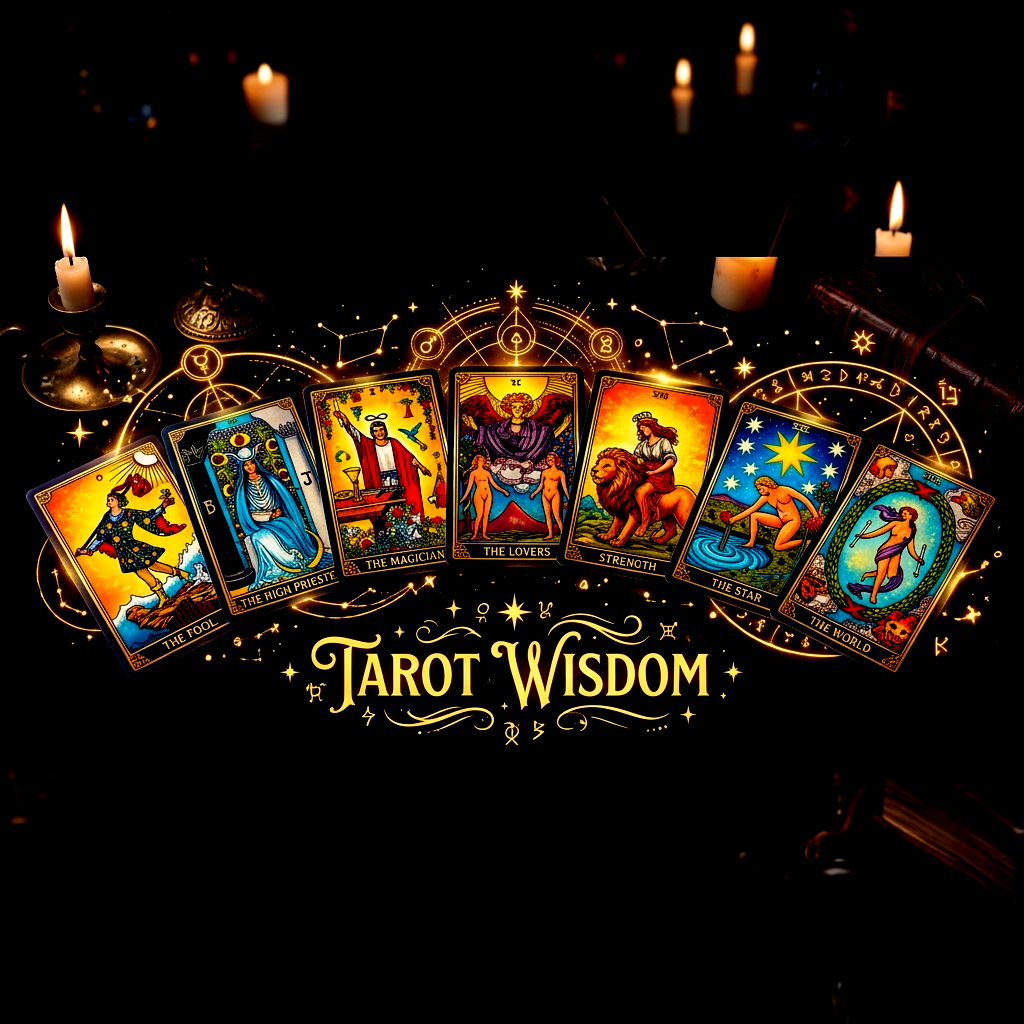
Learning to read tarot cards feels impossible at first. Seventy-eight cards, dozens of possible spreads. Hundreds of symbols. Thousands of interpretations, it is a lot. But here is the thing – every single tarot reader started exactly where you are now. Confused, overwhelmed. Unsure where to start.
This guide breaks tarot reading into clear steps. Follow them in order. Skip ahead if something clicks, come back to sections that feel hard. The goal is not perfection. The goal is to start reading and keep reading until it feels natural.
Step 1: Get to Know Your Deck
Before any reading, spend time with the deck itself. Look at every card, notice the colors, the characters, the symbols. What feelings come up? What stories do the images tell? Tarot cards are visual stories. The meaning lives in the art.
Take each Major Arcana card and sit with it for a minute. The Fool stepping off a cliff. The Empress in her garden. The Hermit holding a lantern. Each image contains layers of meaning that unlock over time.
Go through the Minor Arcana too. Notice how the suits feel different, wands feel active and energetic. Cups feel emotional and fluid. Swords feel sharp and mental. Pentacles feel grounded and physical. Each suit has a personality. Learn those personalities and the individual cards become easier to understand.
Here is what most articles miss. Don’t try to memorize card meanings from a book. The book gives you a starting point. But the real meaning of a card comes from what you see in it. Two readers can pull the same card and give totally different interpretations. Both can be right, tarot isn’t about getting the “correct” meaning. It’s about finding the useful meaning.
Step 2: Learn to Shuffle with Intent
Shuffling is part of the reading. It isn’t just preparation. The way you shuffle sets the tone. Overhand shuffling is common and gentle. Riffle shuffling is faster but can bend cards. Pile shuffling separates the deck into stacks and recombines them – some readers use this for more thorough mixing.
While shuffling, hold the question in mind. Focus on what the reading is about, let random thoughts pass. Keep coming back to the question. The shuffle is where intention meets randomness. When the deck feels ready – you’ll feel it – stop shuffling and cut the deck or start pulling cards.
Step 3: Choose a Spread
Think about it, A spread gives structure to the reading. Without a spread, you just have a pile of cards with no context. With a spread, each card position has a specific meaning. That context guides interpretation.
For beginners, the three-card spread is ideal. Here are some position options:
- Past / Present / Future
- Situation / Obstacle / Advice
- Mind / Body / Spirit
- You / Other Person / Relationship
- What to keep / What to release / What to learn
Pick the spread that fits the question. A relationship question might use “You / Other Person / Relationship.” A career question might use “Situation / Obstacle / Advice.” The spread should match the shape of the question.
Resist the urge to jump to complicated spreads. The Celtic Cross is impressive but confusing. Ten cards create layers of meaning that are hard to untangle as a beginner. Master three-card spreads first. Then try five-card spreads, work up to bigger layouts as confidence grows.
Step 4: Interpret the Cards
This is the hard part. The cards are on the table, what do they mean?
Start with the imagery. Look at each card and describe what you see. A woman holding a sword. She looks determined, maybe a little sad. Water behind her, something about truth or cutting through illusion. That’s the Queen of Swords. The image alone tells most of the story.
Add the traditional meaning. The Queen of Swords represents clear thinking, direct communication, and emotional boundaries. She can indicate a period where logic overrides feeling. Or she can represent a person in the querent’s life – someone sharp, honest, maybe a bit cold.
Now connect the card to the position. If the Queen of Swords appears in the “Advice” position of a relationship spread, the message is about speaking honestly and setting boundaries. In the “Obstacle” position, she might suggest that being too logical is blocking emotional connection. Same card. Different meaning based on position.
Look at card combinations. Cards next to each other tell a story together. A positive card next to a negative card softens the negative. Two similar cards reinforce each other. The Moon (confusion, illusion) paired with the Star (hope, clarity) suggests that confusion is lifting and clarity is coming.
Don’t force interpretations, if nothing comes, say so. “the querent isn’t sure what this means yet.” That is an honest reading. Fake confidence doesn’t help anyone. Sometimes the meaning comes later, during reflection, not during the reading itself.
Step 5: Connect the Story
Once each card is interpreted, step back and look at the whole spread. What story do the cards tell together? This is where reading becomes an art instead of a mechanical process.
Say the spread has The Sun, Ten of Cups, and The World. That’s a clear story about fulfillment, happiness, and completion. The reading practically writes itself. Now say the spread has The Tower, Five of Pentacles, and The Moon. That is a story about disruption, hardship, and confusion. The reading needs more sensitivity and care.
Tell the story in plain language.
Notice how that reading uses the cards but doesn’t sound like a textbook. The goal is human communication, not academic analysis.
Step 6: Close the Reading
When the interpretation is done, thank the cards. Some readers thank the querent. Some thank whatever force they believe guided the reading. The closing matters because it creates a psychological boundary between reading time and normal time.
Put the cards back in order or leave them for later. Some readers insist on resetting the deck after each reading. Others leave it as-is. Both approaches work. The important thing is to mentally close the reading and move on.
Offer the querent space to ask questions about the reading. Sometimes the most valuable insights come from talking through the interpretation together. The reader doesn’t have to have all the answers. Discussion deepens the reading for everyone.
Common Mistakes and How to Avoid Them
Reading too fast is the most common mistake. New readers see a scary card like The Tower and immediately jump to disaster. Slow down, look at the whole spread. The Tower surrounded by positive cards has a different meaning than The Tower surrounded by negative ones.
The thing is, Over-relying on guidebooks is another trap. The guidebook gives one meaning for each card. But every card has dozens of possible meanings. The guidebook is a starting point, not the final word. Trust what you see in the card. The book can wait.
Telling querents what to do is the biggest ethical mistake. Tarot readings offer perspective, not orders. Never say “you should break up” or “quit your job.” Frame everything as possibility. “The cards suggest this relationship may need honest communication. How does that land with you?”
Final Thoughts
Honestly, Tarot reading is a skill. Like any skill, it improves with practice. The first fifty readings will feel clumsy. That is normal. The next fifty will start to flow. After a few hundred readings, patterns become obvious and interpretations come quickly. The learning never stops, that is what makes tarot interesting.
Start today. Pull one card. Ask one question. Write down what you see, do that every day for a month. By the end of that month, you’ll know more about tarot than ninety percent of people who own decks. Reading tarot is not about being special, it’s about paying attention.
Frequently Asked Questions
How does someone know which spread to use?
Match the spread to the question. Simple questions need simple spreads. A one-card draw works for daily guidance. A three-card spread works for specific situations. Complex questions about life direction might need five or seven card spreads. The spread should not be more complicated than the question.
What if the cards do not make sense together?
That happens to every reader, when cards seem contradictory, look for the connection. Death next to The Sun might mean an ending that leads to happiness. The Tower next to The Star might mean a crisis that brings hope. Contradictory cards often point to transition periods where opposing forces exist at the same time.
Should the querent read reversed cards as a beginner?
That depends. Some readers never use reversals and have perfectly good readings. Others find reversals add useful depth, start with upright meanings only. After a few months, try incorporating reversals if they feel right. More detail is available in the guide to reversed tarot cards.
How does someone deal with scary cards like Death or The Tower?
Remember that no tarot card is purely negative. Death means endings, yes – but also new beginnings. The Tower means destruction – but also liberation from false structures. These cards feel intense but their message is almost always about necessary change. Stay calm and look for the constructive angle.
Can someone read for strangers online?
Yes. Online readings work the same as in-person readings. The connection between reader and querent happens through intention, not physical proximity. Many professional readers do most of their work remotely. Just be clear about ethics and privacy when reading for people you do not know.