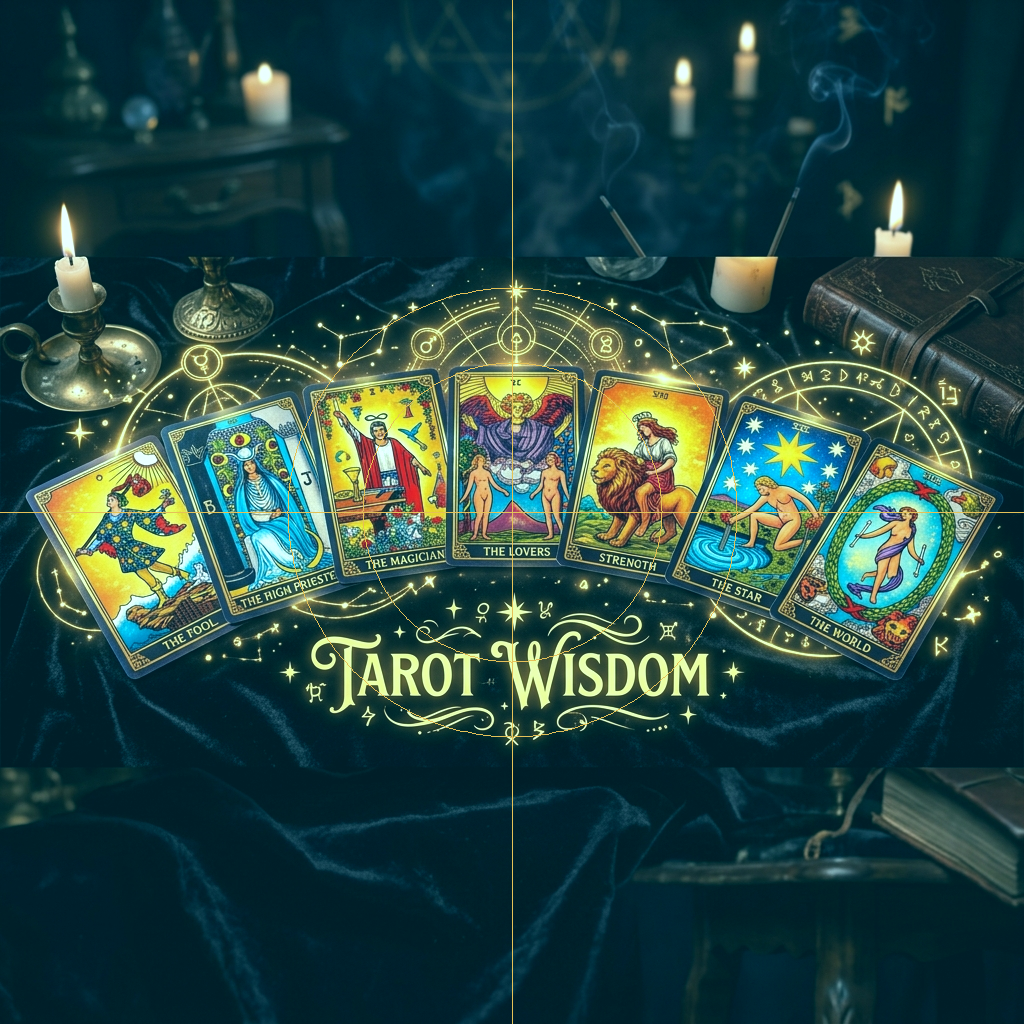
Reversed tarot cards divide the tarot community. Some readers consider them key. Others never use them. Both groups produce excellent readings. The question is not whether reversals are “correct.” The question is whether they’re useful for the reader’s style.
A reversed card is simply a card that appears upside-down when pulled. About half the cards in any shuffled deck will be reversed statistically. Unless the reader intentionally rights them, reversals happen naturally. The debate is about what to do with them.
What Reversals Mean
There is no single accepted meaning for reversals. Different traditions assign different interpretations. The most common approach sees reversals as blocked, delayed, or internalized versions of the upright meaning.
The Ten of Cups upright represents emotional fulfillment and family happiness. Reversed, it might suggest family conflict, broken relationships, or a sense of emotional disconnection. The core theme (relationships, emotions, home) stays the same. The expression of that theme shifts from external to blocked or internal.
The thing is, Another common interpretation sees reversals as excess or deficiency. The upright card shows a balanced expression. The reversed card shows too much or too little of that energy. The Queen of Swords upright represents clear thinking and honest communication. Reversed, she might represent overly harsh communication (excess) or difficulty speaking up (deficiency).
Some readers interpret reversals as the energy moving inward. Instead of external action, the card points to internal processing. The Knight of Wands upright charges forward with passion and adventure. Reversed, the Knight’s energy turns inward – restless thoughts, unrealized plans, passion that hasn’t found an outlet.
Timing interpretations also exist. Some readers see reversals as delays or blocks in the card’s timing. The upright card shows energy manifesting now or soon. The reversed card shows the same energy stuck or delayed. This interpretation fits well with questions about timelines and outcomes.
Here is what most articles miss. There is no rulebook for reversals. The meaning depends on the reader’s system. A reader who decides that all reversals mean “blocked energy” will find that interpretation consistently useful. A reader who uses reversals to indicate “internal focus” will also find consistent value. The system matters less than the consistency.
The Case Against Reversals
Many excellent readers don’t use reversals at all. They read every card upright regardless of how it falls. Their argument is simple, tarot already has enough complexity. Adding reversals doubles the meanings for no real benefit.
Some argue that reversals distract from the reading. A beginner who pulls the Tower reversed might spend five minutes figuring out what “reversed Tower” means when the Tower upright is already giving clear information. Why add complexity where none is needed?
Another argument against reversals is that they create unnecessary negativity. Readers who interpret reversals as “bad” versions of cards may produce overly negative readings. The upright meaning is usually sufficient to convey challenges and difficulties. The Three of Swords is painful enough without saying “and it is reversed, so it is worse.”
The historical argument says reversals are a modern invention. Early tarot traditions didn’t emphasize reversals, the Rider-Waite-Smith guidebook by A. E. Waite barely mentions them. Reversals became popular in the mid-20th century through writers like Eden Gray. They are a relatively recent addition to tarot practice. Peterson in the History of Cartography journal noted that pre-20th century tarot literature almost never discusses card orientation.
The Case For Reversals
Reversals add depth. A reading with all upright cards tells one story. Reversals introduce tension, contradiction, and nuance. The same spread with reversals tells a more complex story. For readers who value depth over simplicity, reversals are valuable.
Reversals signal importance. A reversed card stands out. The eye notices the upside-down card first. This visual cue can draw attention to the most major card in the spread. Some readers feel that reversed cards demand closer attention because they indicate blocked or challenged energy.
Reversals provide more interpretive material. Instead of 78 meanings, the reader gets 156. This expanded vocabulary can make readings more specific and detailed. A client who hears “the energy is blocked” gets a different message than “the energy is flowing.” Reversals allow that distinction.
Some readers feel that reversals make the shuffle more honest. If all cards are righted before reading, the reader is selecting which orientation the cards show. Using natural reversals means accepting whatever comes up. This feels more authentic to some readers, miller in the
How to Start Reading Reversals
If you want to try reversals, start slowly. Don’t switch from upright-only to full reversals overnight. The transition can be overwhelming. Instead, try one approach at a time.
Method one: shuffle naturally and note which cards appear reversed. Interpret the reversed cards using a simple rule like “blocked energy” or “internal focus.” Keep it simple. Don’t invent complex reversal meanings for every card. One rule applied consistently works better than 78 different reversal rules.
Method two: intentionally reverse some cards when the reading feels one-sided. If every card is positive, flip one or two cards to reversed and see how that changes the story. This selective approach allows control over when reversals appear.
Method three: use reversals only for specific spreads or questions. Some readers use reversals for deep psychological questions but not for practical daily questions. Others use them for personal readings but not for client readings. There’s no requirement to be consistent across all readings.
Keep a record of reversal interpretations. Write down what each reversed card meant in the context of the reading. Over time, patterns emerge. The reversed Queen of Cups might consistently show up around emotional avoidance for a particular reader. That pattern becomes part of the reader’s personal vocabulary.
Alternatives to Reversals
Not all readers who want more complexity use reversals. Some use other approaches to add depth. Shadow cards – pulling an extra card to clarify the shadow or challenge side of a reading. Clarifier cards – pulling a second card when a card feels unclear. Elemental dignities – using the elements of adjacent cards to modify meaning. Position-based interpretation – letting the spread position do the work of adding nuance.
Here’s the thing, These alternatives provide depth without the cognitive load of learning 78 additional meanings. For readers who feel pressured to use reversals but struggle with them, these approaches offer a middle ground.
Another alternative is to read the card’s orientation as a timing indicator. Upright means the energy is active now. Reversed means the energy is coming soon or fading away. This approach keeps the interpretation simple while using orientation as additional data.
What Beginners Should Do
The truth is, Here is practical advice. Start without reversals. Learn the 78 upright meanings first, build confidence with basic interpretations. After three to six months of regular practice, experiment with reversals. See if they add value to readings, if they do, keep them. If they create confusion, drop them.
Many beginners feel pressure to use reversals because “real readers” use them.
If reversals consistently confuse or slow down readings, stop using them. That deck, that reader, and that moment don’t need reversals. Try again later with a different deck or after more practice. Reversals are optional. They always will be.
Final Thoughts
Sure, Reversals are a tool, not a requirement, some readers find them invaluable. Others find them unnecessary, neither approach is wrong. The right choice is the one that produces clear, useful readings for the reader and the querent.
Experiment, try readings with and without reversals. Compare the results, notice which approach feels more natural. Trust personal experience over tradition, trends, or peer pressure. Tarot is a personal practice. The tools chosen should serve the practice, not complicate it.
Frequently Asked Questions
Do the querent has to use reversals to be a real tarot reader?
The truth is, No. Many professional readers never use reversals. The quality of a reading depends on interpretation skill, not whether cards are read upright or reversed. Some of the most popular tarot decks even print keywords on cards assuming upright reading only.
What percentage of cards come out reversed in a normal shuffle?
Roughly 50%. A properly randomized deck will produce an about equal number of upright and reversed cards. If majorly fewer cards appear reversed, the shuffle may not be randomizing orientation effectively.
Can someone use reversals with some decks but not others?
Absolutely. Some decks have designs that work better with reversals. Decks with strong vertical imagery may show obvious reversals. Decks with round or symmetrical designs make reversals harder to see. Match the approach to the deck’s design.
Are reversed cards always negative?
No, a reversed card isn’t naturally bad. It shows a different expression of the card’s energy. The Star reversed might mean temporarily losing hope, but it can also mean finding hope in unexpected places. The reversed meaning may even be less intense than the upright challenge.
How does someone know if a card is reversed or just rotated?
If the card is clearly upside-down relative to the reader, it’s reversed. If it is sideways or at an angle, most readers use their judgment. Some straighten the card and call it upright. Others read the orientation as it appears. Consistency matters more than rigid rules.