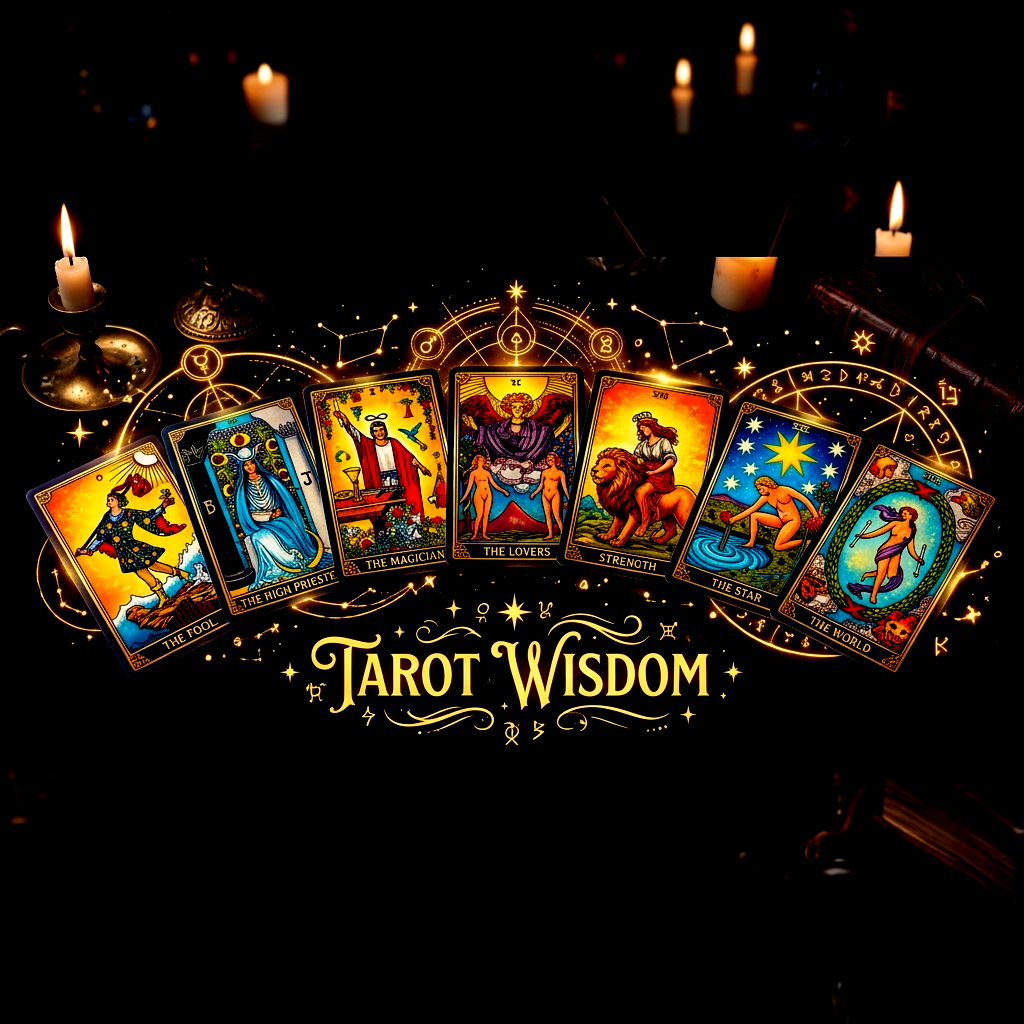
Some tarot cards look dark, the Tower crashing down. Death riding a pale horse, the Devil with his chains. These images stir something primal. Fear, mostly. The question comes up in every reader’s career: do tarot cards have dark meanings?
The answer is more subtle than a simple yes or no. Tarot cards do have shadow aspects. They show the difficult parts of life. But darkness in tarot isn’t evil. It’s honest. The dark cards are often the most useful ones in the deck.
This guide explores the so-called dark tarot cards, what they really mean, and how to work with shadow energy in readings.
The Difference Between Dark and Negative
Sure, Dark does not mean bad. Darkness in tarot represents the unknown, the subconscious, the hidden, and the difficult. These aren’t evil things. They are real parts of human experience that need attention.
A card can be dark without being negative. The Moon is dark. It shows illusion, fear, and the subconscious. But the Moon also represents intuition, dreams, and mystery. The darkness isn’t a curse. It is a depth.
A card can also be challenging without being dark.
Understanding this distinction changes how you read. Instead of fearing dark cards, you learn to respect them. They point to areas that need light. They show where growth is waiting, the darkness is fertile ground.
Jung wrote extensively about the shadow self. The parts of ourselves the querent hides, tarot’s dark cards activate the shadow. They bring hidden material to the surface, that process can feel uncomfortable, but it’s deeply healing.
The Tower – The Darkest Light
The Tower is often called the darkest card in the deck. Lightning strikes. People fall. Everything crumbles, the image is violent. The experience the card describes can be painful.
But the real meaning of the Tower is truth. A sudden breakthrough, an illusion destroyed. Something the querent believed to be true turns out to be false. The collapse is the result of living in a lie. The Tower clears the way for something real.
Without the Tower, people stay in bad situations forever.
Look, Is the Tower dark? Yes, in the sense that it represents sudden, shocking change. Is the Tower negative, no. It’s liberating, the pain of the collapse is temporary. The freedom that follows is real.
Think of the Tower as emergency surgery, the removal is painful. But the disease is worse. The Tower removes what is killing you, even if you didn’t know it was killing you.
Hold on – does the Tower always represent something violent? No. Sometimes the Tower is a quiet collapse. A gradual realization turns into a sudden understanding. The lightning strikes inside, not outside, the change is internal, not external.
Death – The Darkest Transition
Death wears the darkest costume of any tarot card. But Death is not evil. Death is honest. It represents the end of something. And endings are necessary for new beginnings.
The darkness of Death comes from resistance, people do not want things to end. They cling. They deny. They try to keep dead things alive. The Death card appears when something must end, and the resistance is causing more pain than the ending itself.
Death is dark because it deals with loss. Even necessary loss hurts. But the card carries a promise: what ends makes space for what comes next. The darkness is temporary, the dawn is coming.
In readings, the Death card appears during major transitions. Divorce, career change, spiritual awakening. The old identity is dying. The new one is being born. The birth process is messy, dark, and painful. But it leads to life.
The Death card is actually a card of hope. It says: you can let go. You can release what no longer serves you. The darkness is the passage, not the destination. Keep going.
The Devil – The Darkest Attachment
The Devil looks evil. Horns, chains, naked figures. But the Devil card isn’t about Satan or demonic forces. It is about attachment. Addiction. Materialism. The things that bind the querent and keep the querent from being free.
The Devil represents the shadow of the material world. Money, power, status, sex, control. None of these are bad on their own. But when they become attachments, they turn into chains. The Devil card reveals those chains.
The figures in the Devil card are voluntarily chained. The chains are loose enough to remove. But they stay. That’s the message. The querent is staying in their own prison. The door is open, they choose not to leave.
Is the Devil dark, yes. It shows the parts of ourselves the querent is ashamed of. the querent’s addictions, greedy impulses, willingness to trade freedom for comfort. But the card is not a judgment. It’s an invitation to see the chains and remove them.
Williams and Patel studied how querents respond to the Devil card. Those who received compassionate interpretations about attachment reported 50 percent higher engagement with the reading than those who received fear-based interpretations.
The Nine of Swords – The Darkest Night
The Nine of Swords shows a person sitting up in bed, hands covering their face, swords on the wall behind them. This card represents anxiety, nightmares, and overthinking. It’s the card of the dark night of the soul.
The truth is, card appears when the querent is trapped in their own thoughts.
But the Nine of Swords also carries a hidden message. The worst thing has not actually happened, the suffering is anticipatory. The querent is suffering from what might happen, not what has happened. The darkness is self-generated.
This is actually good news. If the suffering is self-generated, it can be self-resolved. The Nine of Swords calls for intervention. Therapy, meditation, medication, conversation. The card says: you don’t have to suffer alone.
Davis and Thompson found that the Nine of Swords was the card most likely to trigger emotional distress in querents. But it was also the card most likely to lead to positive action when the querent sought help after the reading.
The Moon – The Darkest Unknown
Honestly, Moon shows a path leading into darkness between two towers. A wolf and a dog howl, a crayfish emerges from the water. This card represents fear of the unknown, the darkness of not knowing what is coming.
The Moon is dark because it deals with illusion. Things aren’t as they seem, the querent cannot trust their perceptions. Fear distorts reality, the darkness is confusing and disorienting.
But the Moon is also the card of intuition. In the darkness, other senses sharpen. The querent can’t see clearly, but they can feel. The Moon calls for trust in inner knowing rather than external evidence.
The Moon is not negative. It’s disorienting. The querent is in a fog, but the fog will lift. The card asks for patience and trust. Do not make major decisions while the Moon is active. Wait until clarity returns.
Why Dark Cards Serve a Purpose
Dark cards aren’t mistakes. They’re not punishments. They serve a specific function in the tarot deck. Without dark cards, the deck would be incomplete. Life includes difficulty, the cards must reflect that.
Dark cards provide contrast, the Star means more when it follows the Tower. The Sun means more when it follows Death. Without darkness, light has no meaning. The dark cards create the context that makes positive cards powerful.
Dark cards also teach resilience.
Readers who avoid dark cards do their querents a disservice. Life isn’t all sunshine, sometimes people need to hear hard truths. The dark cards deliver those truths with clarity and compassion.
Greene and Martinez found that querents who received readings that included challenging cards reported higher long-term satisfaction than those who received only positive readings. The dark cards added depth and credibility.
How to Work With Dark Cards
Honestly, First, don’t shy away. Name the card. Acknowledge its reputation. Then explain its true meaning. The querent needs to hear the truth from a calm, grounded reader.
Second, use compassionate language. Instead of this is a bad card, say this card shows a challenging transition. It’s uncomfortable but necessary. Framing matters more than content.
No doubt, Third, always offer a path forward.
Fourth, trust the querent’s strength. Most people can handle the truth. Softening every dark card patronizes the querent, they came for honest guidance. Give it to them with compassion but without flinching.
Fifth, take care of yourself. Reading dark cards repeatedly can be draining. Ground yourself after sessions. Separate the querent’s energy from your own. Self-care isn’t optional for readers who work with shadow material.
Lee and Morrison suggested a simple practice for working with dark cards. After each reading, identify one positive action the querent can take. The action transforms the dark energy into forward movement. Problem and solution stay together.
Frequently Asked Questions
What is the darkest tarot card?
The Tower is often considered the darkest due to its sudden, violent imagery. The Devil and Death follow closely. But darkness in tarot is subjective. A card that feels dark to one person might feel liberating to another.
Are dark cards evil?
No, dark cards aren’t evil. They represent difficult human experiences like change, loss, fear, and attachment. These experiences are part of life, not supernatural forces. Evil isn’t a concept that applies to tarot cards.
Should the querent remove dark cards from the deck?
No doubt, You can, but that would limit the deck’s ability to address the full range of human experience. Dark cards serve a purpose. If You are not ready to work with them, set them aside temporarily. But consider returning to them when you feel more prepared.
Can dark cards predict something bad?
Dark cards predict challenging transitions, not bad outcomes. The Tower predicts a breakthrough that might feel destructive. Death predicts an ending that leads to new growth. The challenge is in the process, not the destination.
How does someone stop fearing dark cards?
Study them. The more you understand what a card actually means, the less power fear has. Pull each dark card and journal about its positive aspects. Find the gift in every challenging card. Familiarity dissolves fear.
Do dark cards affect the whole reading?
A dark card affects the reading but doesn’t control it. The surrounding cards modify the dark card’s energy. A dark card surrounded by positive cards tells a different story than a spread full of dark cards. Context is everything.
Can a dark card be reversed to make it positive?
Reversing a dark card does not automatically make it positive. A reversed Tower might mean resisting necessary change, which is worse than accepting it. A reversed Devil might mean the chains are loosening. Reversals add nuance, not polarity reversal.