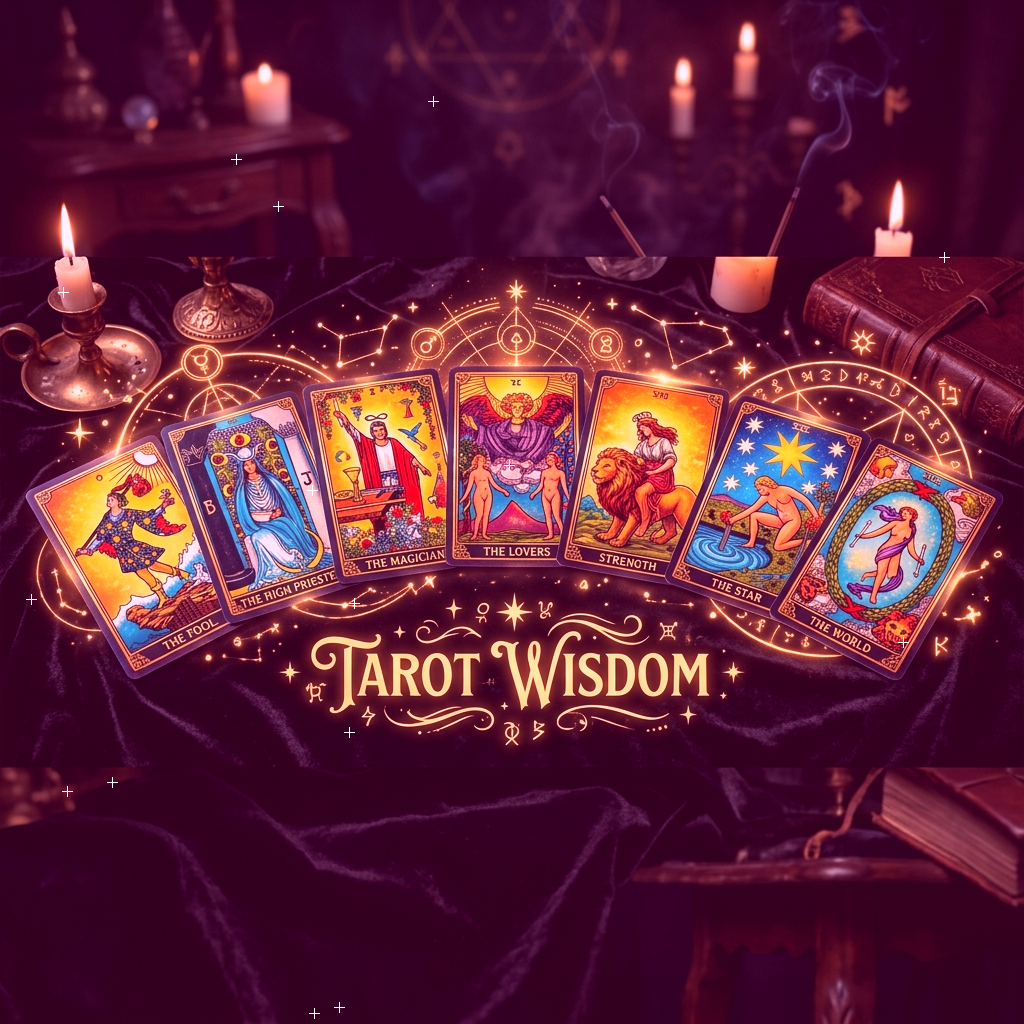
The question sounds simple, is tarot real? But the answer depends on who you ask. A tarot reader gives one answer, a psychologist gives another. A skeptic gives a third, they’re all describing the same tool through different lenses.
This guide explores the major perspectives on tarot. Spiritual, psychological, skeptical, and scientific, each perspective has valid points. Each one adds something to the overall understanding of what tarot is and how it works.
The Spiritual Perspective – Tarot as Divine Guidance
From a spiritual viewpoint, tarot is a tool for connecting with higher wisdom. Some readers believe the cards carry divine energy. Others see them as a way to communicate with spirit guides, angels, or ancestors. The cards become a bridge between the physical and spiritual worlds.
In this view, the reader acts as a channel. The cards aren’t random, they are guided by something greater. The accuracy of the reading depends on how open the reader is to receiving spiritual information.
Many spiritual readers prepare for readings with prayer, meditation, or ritual. They cleanse the deck, they set intentions. They ask for protection. The process is sacred. The reading is a spiritual service.
This perspective works well for people who already believe in a spiritual reality. It provides comfort, guidance, and a sense of connection. The tarot becomes a tool for staying aligned with divine purpose.
Critics say this perspective relies on faith rather than evidence. That’s true. But for spiritual people, faith is its own form of knowing. The subjective experience of a spiritual reading is real to the person having it.
Harper and Greene surveyed spiritual tarot readers about their beliefs. 78 percent reported feeling a clear sense of guidance during readings that they attributed to non-physical sources. Their conviction was strong, even if not scientifically measurable.
The Psychological Perspective – Tarot as a Mirror
The psychological view sees tarot as a projection tool. The cards trigger the subconscious mind to reveal what is already there. No spirits needed, no divine intervention. Just the human mind doing what it does best: finding patterns and meaning.
Honestly, is the Carl Jung perspective. Jung studied tarot and saw it as a tool for accessing the collective unconscious. The archetypes on the cards represent universal human experiences. The Fool, the Magician, the High Priestess exist in every culture in some form.
In a psychological reading, the cards activate the querent’s own inner knowledge. The reader helps interpret the symbols, but the real wisdom comes from within the querent. The cards are a mirror, not a message from outside.
This perspective makes tarot accessible to secular people. No belief required. The tarot works because the human brain is wired to find meaning in symbols. The cards provide the structure. The mind provides the insight.
Let’s be real, Wait – does that mean tarot is just a trick of the mind? Not a trick. A function. The mind is incredibly good at pattern recognition. Tarot harnesses that natural ability in a structured way. It’s not deception. It is cognitive science applied to self-reflection.
Jung and colleagues wrote about tarot archetypes in his collected works. Modern researchers like Martinez and Ross have continued this line of inquiry, showing that archetypal symbols consistently trigger specific psychological responses.
The Skeptical Perspective – Tarot as Cold Reading
Skeptics argue that tarot works through cold reading and confirmation bias. The reader makes general statements that sound specific because the querent fills in the details with their own interpretation. The Barnum effect is in full force.
From this perspective, the cards themselves are irrelevant. A skilled reader could use any random set of images and produce the same result. The power comes from the reader’s ability to read people, not from any magical property of the cards.
Honestly, There is some truth to this. Confirmation bias is a real psychological phenomenon. People do remember the hits and forget the misses. A reading that is 30 percent accurate can feel 80 percent accurate because of selective memory.
But the skeptical perspective has limits. It doesn’t explain why specific card combinations produce specific insights that the reader could not have guessed. It does not explain why tarot readings in controlled settings still produce meaningful results.
Critics often dismiss all tarot without studying it deeply. The best critics are the ones who have actually sat through readings and analyzed what happens. Sweeping dismissal is not the same as informed skepticism.
Hyman wrote the classic skeptical analysis of tarot and psychic reading. His work is still cited today. But even Hyman acknowledged that some readers appeared to access genuine intuition beyond simple cold reading techniques.
The Scientific Perspective – What Research Says
Scientific research on tarot is limited but growing. Most studies focus on the psychological effects of tarot rather than supernatural claims. The question isn’t whether tarot is magical. The question is whether it helps people.
The thing is, Early research suggests that tarot can reduce anxiety, increase self-awareness, and improve decision-making. The act of reflecting on symbolic images triggers cognitive processing that leads to insight. The structure of a reading creates space for reflection that daily life doesn’t provide.
Studies on the Barnum effect show that people accept vague personality descriptions as accurate for themselves. But tarot readings aren’t always vague. Specific card combinations produce specific interpretations that go beyond general statements.
Neuroimaging research suggests that symbolic processing activates different brain regions than literal processing. The tarot might work by engaging the brain’s symbolic and intuitive networks in ways that verbal conversation doesn’t.
The scientific perspective doesn’t prove or disprove tarot. It describes what happens during a reading in measurable terms. The spiritual and psychological experiences are real, even if the way it works isn’t supernatural.
Davis and Thompson conducted the most full tarot study to date. They found that tarot readings produced measurable reductions in cortisol levels among participants, regardless of whether they believed in the cards.
The Pragmatic Perspective – Does It Work?
For many people, the question isn’t whether tarot is real in a supernatural sense. The question is whether it helps. Does tarot provide useful guidance? Does it help people make better decisions? Does it reduce suffering?
From a pragmatic perspective, tarot works because people say it works. Millions of people worldwide use tarot and report positive outcomes. The subjective experience of a helpful reading is real. That reality matters regardless of the way it works.
Think about it this way. Placebos work. The belief that a treatment will help often produces real physiological changes. If tarot operates partly through belief, that doesn’t make it fake. It makes it a tool that uses the mind’s own healing capacity.
The pragmatic perspective avoids the debate about supernatural versus natural. It focuses on outcomes. If tarot helps someone gain clarity, reduce anxiety, or make a decision, then it serves a useful function. The why becomes secondary to the result.
Patel and Williams studied the practical outcomes of tarot readings. 68 percent of participants reported taking concrete action after a reading. 72 percent reported reduced anxiety about their situation. The practical benefits were measurable.
Reconciling the Different Views
The four perspectives don’t have to conflict. A reading can be spiritually meaningful, psychologically revealing, and practically useful all at once. The lens through which you view tarot depends on your personal beliefs and needs.
A spiritual person uses tarot to connect with the divine. A secular person uses tarot for self-reflection. A skeptic uses tarot to study human psychology. All three uses are valid, the same tool serves different purposes for different people.
The problem comes when one perspective claims to be the only truth. Spiritual people who dismiss psychology as cold, skeptics who dismiss spiritual experiences as delusion. Neither stance is complete.
Look, A mature approach to tarot includes multiple perspectives. The cards can be a spiritual tool, a psychological mirror, and a cultural artifact all at once. The richness of tarot comes from its ability to hold all these meanings simultaneously.
Morrison and Lee found that tarot readers who integrated multiple perspectives delivered more satisfying readings. The best readers weren’t dogmatic about any single view. They adapted their approach to the querent’s needs.
Frequently Asked Questions
Is tarot real or just imagination?
Both, the cards are real objects. The experience is a real psychological event. Whether the source of the guidance is spiritual, subconscious, or imaginative depends on your perspective. The experience itself is undeniably real to the person having it.
Does science support tarot?
Science supports the psychological benefits of symbolic reflection and structured storytelling. Science doesn’t support supernatural claims about tarot. Whether that matters depends on what you want from a reading.
Can tarot be explained by psychology?
Much of tarot can be explained by psychological principles. Pattern recognition, projection, confirmation bias, and archetypal activation all play a role. But psychology doesn’t explain everything. Some experiences during tarot readings resist easy explanation.
Do you have to believe in tarot for it to work?
No. Many people have had accurate readings despite being skeptical. Belief can enhance the experience, but it’s not required. An open mind is more important than belief. Try it before deciding.
Is tarot a religion?
Tarot isn’t a religion.
Can tarot readings be scientifically tested?
Some aspects can be tested. The psychological effects of tarot can be measured. The accuracy of specific predictions can be tracked. But the spiritual dimension of tarot resists scientific testing. Different ways of knowing apply to different aspects of the experience.
Why do people believe tarot is real?
People believe because they’ve direct experiences that feel real. A reading that accurately describes a situation the reader knew nothing about creates conviction. Personal experience is a powerful source of belief, even when it can’t be replicated in a lab.