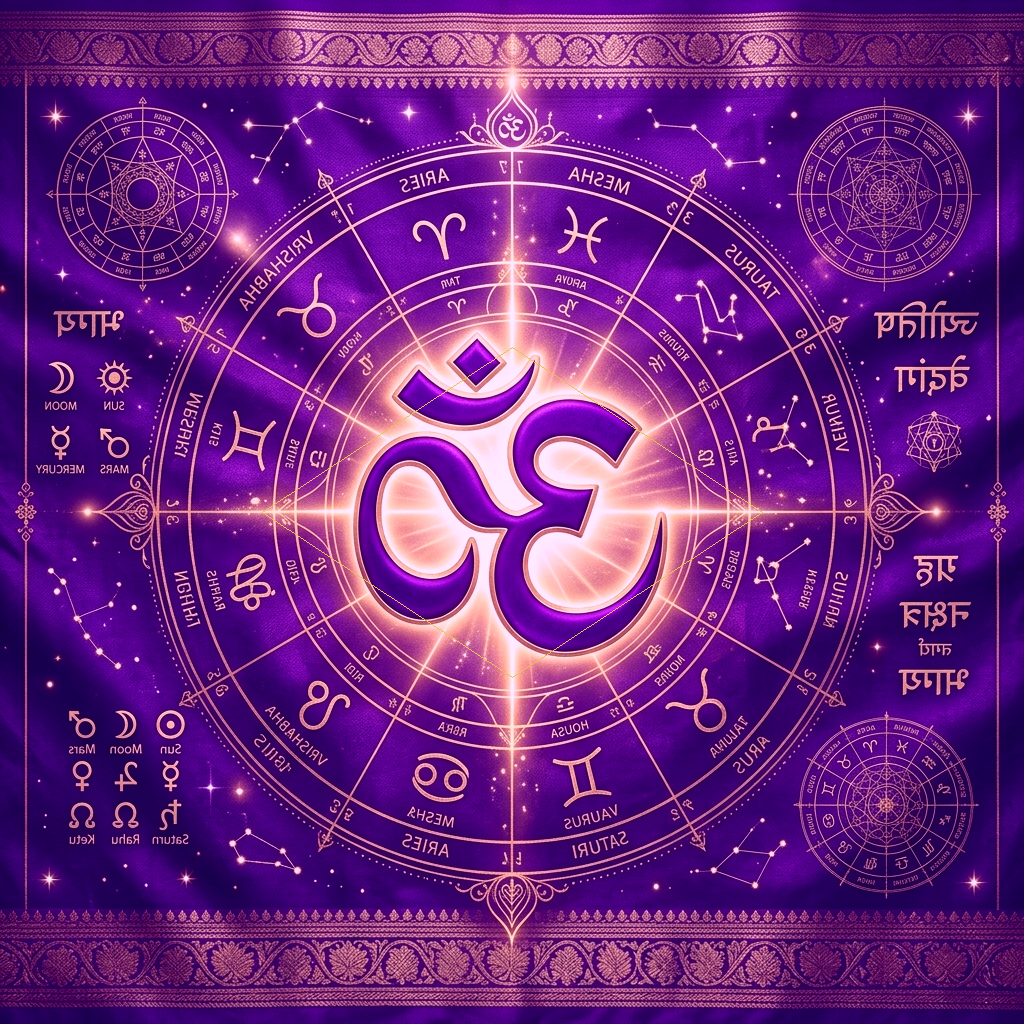
The moon sign, or Rashi, acts as the primary lens through which the individual perceives the flow of existence. While the Lagna defines the physical vessel and the external trajectory, the Rashi governs the internal architecture of the psyche. It dictates the habitual responses of the mind and the comfort zones where the spirit retreats to seek solace. In Vedic astrology, the moon is the Manas, the seat of fluctuating emotions and the arbiter of mental peace.
Every Rashi resides within a specific Bhava in the natal chart, yet its influence extends far beyond mere placement. The Nakshatra occupied by the Moon provides the fine-grained texture of this experience. These lunar mansions act as the secret corridors of karma. A planet positioned in a particular Nakshatra reveals the quality of the fruits harvested during a specific Dasha period. The mind doesn’t operate in a vacuum. It responds to the subtle vibrations of the Grahas as they traverse the zodiac.
The Lunar Mandate
A Rashi is not merely a label, it is a cluster of predispositions. Consider the watery signs: Karka, Vrishchika, and Meena. These signs demand emotional depth and often struggle with the turbulence of subjective experience. Their internal geography is prone to tidal shifts. They perceive reality through the filter of intuition, often bypassing logical deduction entirely. Conversely, the fiery signs like Mesha, Simha, and Dhanu prioritize impulse and the assertion of the self. They are driven by the innate need to project power and manifest intent into the material world.
Earth signs, including Vrishabha, Kanya, and Makara, anchor the psyche in the tangible. They require sensory validation. Without a concrete result, their minds wander into the territory of doubt. Air signs such as Mithuna, Tula, and Kumbha dwell in the ether of intellect. They process reality through the exchange of ideas and the observation of social patterns. Each Rashi possesses a unique set of Yogas that dictate how it handles the challenges of life. Some signs endure with quiet resolve. Others thrive on the intensity of conflict.
Do you feel as though your internal reactions are often at odds with your external circumstances? This friction is the hallmark of the disconnect between the Lagna and the Rashi. The struggle isn’t a flaw. It’s a necessary friction for the growth of the soul.
Divisional Charts and the Hidden Layers
The Rashi chart provides the macro view, yet it remains incomplete without the Varga charts. The Navamsha, or D-9 chart, reveals the hidden strength of the Moon. A planet may appear strong in the Rashi chart but falter in the Navamsha. This indicates a person who maintains a composed exterior while battling intense internal discord. The divisional charts peel back the layers of the personality, exposing the vulnerabilities that are usually kept hidden from the public eye.
Look, Upagrahas add another dimension to the lunar story. These shadow points interact with the Moon to color the emotional expression. Mandi and Gulika, when connected to the Moon, introduce a heavy or melancholic tone to the thought process. This doesn’t imply misfortune. It suggests a mind that dwells on the profound and the hidden aspects of reality. Such individuals often possess an uncanny ability to perceive the darker truths that others choose to ignore.
The Dasha Cycle and Mental Evolution
The Dasha, or the timing of destiny, dictates when the Rashi will truly exert its influence. A person might live for decades without fully inhabiting the deeper qualities of their Moon sign. Then, the Mahadasha of the Moon arrives. Suddenly, the emotional patterns intensify. The mind becomes the focal point of the life experience. Old habits resurface with renewed vigor. Patterns that were once dormant become the defining features of the current era.
Each Graha passing through the Rashi shapes the mood of the individual. When transit Saturn casts a drishti upon the Moon, a period of introspection and isolation follows. The mind becomes heavy. Duties weigh upon the heart. When Jupiter aspects the Moon, a sense of optimism and philosophical inquiry takes over. The mind seeks higher meaning rather than simple gratification. These shifts are rhythmic and predictable for those who study the movement of the heavens.
The Architecture of Thought
The twelve Rashis divide the sky into distinct domains of experience. Each sign has a ruler, a Graha that acts as the guardian of that territory. The placement of this ruler in the natal chart tells the story of how the Rashi is supported. If the lord of the Rashi is well placed and dignified, the mind possesses a natural sense of direction. If the lord is afflicted, the person may struggle to find peace within their own skin.
Consider the sign of Kanya. It’s governed by Budha, the planet of intellect and discrimination. Individuals with a Kanya Moon often experience the world through constant analysis. They seek to organize the chaotic nature of life into neat, logical categories. They find comfort in precision. When life becomes disorderly, they experience major distress. Their peace is tethered to their ability to understand and categorize the world around them.
Contrast this with Simha, ruled by Surya. The Simha Moon seeks recognition and validation. The emotional well being of this person is tied to their sense of dignity and the impact they have on their surroundings. They aren’t merely observers. They are participants in the drama of their own lives. When they feel unseen, they wither. When they’re acknowledged, they shine with a brilliance that’s impossible to ignore.
Is your primary motivation driven by a need for intellectual clarity or a need for social significance? Observe the placement of your Moon sign ruler to find the origin of that specific drive.
The Transience of Emotion
The mind is a restless traveler. It moves through the Rashis, collecting experiences and storing them as memories. The Nakshatra in which the Moon resides determines the speed and intensity of these memories. Some Nakshatras are swift, leading to quick flashes of insight and rapid emotional shifts. Others are deliberate and slow, allowing for deep, sustained emotional states that can last for years.
The interaction between the Moon and other Grahas in the natal chart defines the character of the mind. A Moon conjoined with Mangala creates a sharp, reactive, and courageous emotional nature. These individuals act first and think later. A Moon conjoined with Shani creates a disciplined, cautious, and sometimes burdened mind. They see the limitations of the world before they see the possibilities.
These placements are not static. They’re merely the starting positions in a long-running race. The Dasha system ensures that every part of the chart eventually sees the light of day. The challenges posed by a difficult Moon placement are designed to refine the mind. By confronting these specific emotional hurdles, the individual gains a level of mastery that would be impossible under easier conditions.
Observing the Cycle
Vedic astrology teaches that the Rashi is the landscape, but the individual is the traveler. One can’t change the geography of the land, but one can change the path taken through it. Understanding the Rashi is the first step toward self-awareness. It allows the individual to recognize the habitual patterns of thought that often lead to unnecessary suffering. Once recognized, these patterns lose their power.
Silence the noise of external expectations. Look toward the inner rhythm defined by the lunar position. The patterns are consistent. The cycles are eternal. The mind eventually learns to mirror the stillness of the cosmos, regardless of the Rashi it inhabits.
There’s no end to the learning process. Each cycle provides new information about the nature of the mind. The sky continues to shift, the Grahas continue their dance. The observer watches, remains detached, and understands the unfolding of the cosmic order. The Rashi is a map, but the journey remains entirely yours to witness.