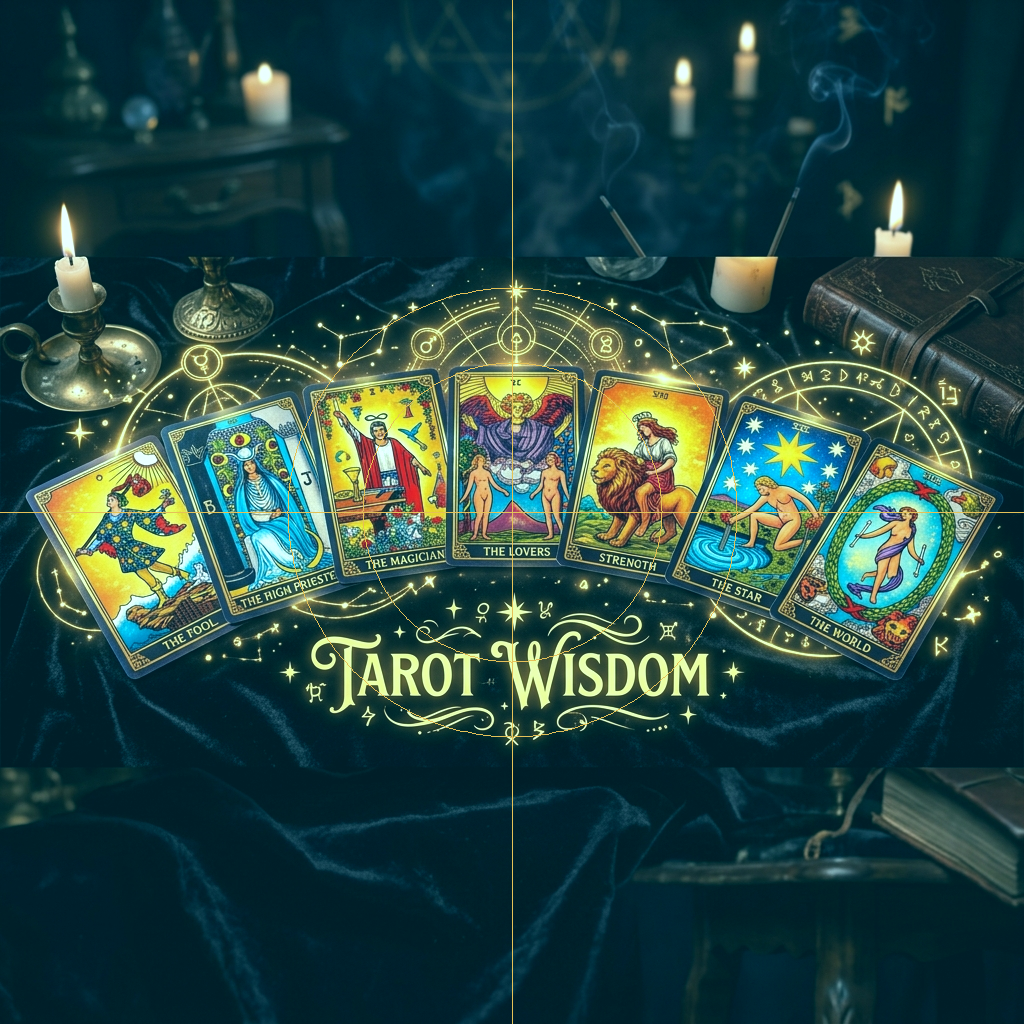
Tarot readings do not happen in a vacuum. Each spread connects to the ones before it and the ones after it. Over time, patterns emerge. Certain cards show up again and again. Dominant suits appear. Specific numbers repeat. These patterns tell a story that no single reading can capture.
Recognizing tarot patterns across spreads is a skill that separates average readers from great ones. It requires tracking, memory, and a willingness to see the big picture. This guide covers how to spot these patterns and what they mean.
Why Patterns Matter Across Readings
A single reading is a snapshot. It shows where the querent stands right now. But patterns across multiple readings reveal the movie. The trajectory. The arc. The same way a doctor looks at health trends over months, not just one visit, tarot readers should look at reading trends over time.
Repeating cards are the most obvious pattern. If the Tower shows up in three consecutive readings, the universe is not being subtle. Something needs to fall apart. The querent is avoiding it, and the cards keep saying the same thing.
Suit dominance across multiple readings is another major pattern. If every reading for two months has been heavy on Swords, the querent is stuck in their head. Mental energy is dominating. The pattern suggests they need to shift into feeling or action.
Wait, there is more to it than just repeating cards.
Repeating Cards and What They Signal
The most direct pattern is a card that appears repeatedly. Three times or more in a short period means the querent needs to pay attention. The card isn’t done teaching its lesson.
Here is how to interpret repeating cards:
The Fool repeats. The querent keeps avoiding commitment. Or keeps starting new things without finishing them. The message: pick a path and walk it.
No doubt, The Hermit repeats. The querent needs alone time but keeps filling their schedule. The message: solitude is required. Stop avoiding the quiet.
The truth is, The Ten of Swords repeats. The querent is holding onto a story of victimhood. The ending already happened. Staying in the pain is a choice.
No doubt, The Ace of Pentacles repeats. Opportunities keep appearing but the querent is not taking them. The message: say yes to something real.
Repeating cards lose their surprise value and gain teaching value. Instead of interpreting each appearance as new information, see them as reinforcement. The universe is repeating itself because the querent isn’t listening.
Davis and Ueno researched repetition in symbolic communication and found that repeated symbols carry increasing weight over time. The first appearance is a suggestion. The third appearance is a demand.
Suit Dominance Over Time
Track which suits appear most often across multiple readings. If Cups dominate, emotional themes are central. If Wands dominate, action and passion are the focus. And so on.
A three-month pattern of Cups dominance suggests the querent is in a deeply emotional life phase.
A pattern of Pentacles dominance over several readings suggests the opposite. The querent is focused on work, money, and physical health. Emotional life might be neglected. The pattern points to an imbalance.
Honestly, Readers can use suit dominance patterns to advise the querent on what they are missing. If the spread has been all Wands for weeks, the querent is probably burning out. Suggest rest. If the spread has been all Pentacles, suggest play.
The suits themselves teach balance. Fire, Water, Air, Earth. A healthy life includes all four. Pattern tracking reveals which element is getting too much or too little attention.
Kowalski and Park found that people who monitored life balance across multiple domains reported higher well-being. Suit tracking in tarot serves the same purpose. It reveals imbalance before it becomes a crisis.
Number Patterns Across Spreads
Numbers carry specific energy in tarot, aces are beginnings. Twos are duality. Threes are growth. Fours are stability. Fives are conflict, sixes are harmony. Sevens are challenge. Eights are movement. Nines are near-completion. Tens are endings.
When a specific number keeps appearing across different spreads, that number’s energy is the theme. Repeated Aces across readings suggest new beginnings in multiple areas. Repeated Tens suggest multiple cycles are ending at once.
Let’s look at some examples. If a querent keeps pulling Fours over several weeks, they are building structure. Home, stability, foundation, the pattern says: keep building. Don’t rush to the next stage yet.
If a querent keeps pulling Sevens, they’re in a period of tests and challenges. The energy is uncomfortable but necessary, the pattern says: keep going. Each Seven is a lesson that needs to be learned before moving forward.
Number patterns can be subtle, tracking them requires paying attention to details. But once you see them, they add a layer of precision to any reading.
Think about it, Martinez explored how numerical patterns influence human decision-making. Repeating numbers create a sense of significance, even in people who don’t consider themselves spiritual. Tarot number patterns tap into that same psychological response.
Elemental Patterns
Beyond suits, elemental patterns tell a story, fire (Wands) brings action. Water (Cups) brings emotion. Air (Swords) brings thought. Earth (Pentacles) brings material reality. Major Arcana cards each belong to an element too.
Elemental dominance across spreads reveals the querent’s energetic balance. Too much Fire and not enough Water suggests someone who acts without feeling. Too much Water and not enough Air suggests someone who feels without thinking.
A balanced elemental pattern across readings is the goal. But most people go through phases where one element dominates. That is normal. The pattern just shows where the growth is happening.
For example, someone going through a breakup might have weeks of Water dominance. Sadness, grief, emotional processing. Then Air dominance as they analyze what went wrong. Then Fire as they get angry and ready to move on. The elemental pattern tracks the healing process.
Lee and Torres studied how people cycle through emotional and cognitive states during major life transitions. The elemental patterns in tarot map closely onto those natural cycles. Readers who track elements can predict what comes next.
Tracking Card Absences
Patterns aren’t just about what appears. They’re also about what does not appear. If the Star never shows up in three months of readings, the querent might be lacking hope. If the Ace of Pentacles never appears, financial opportunities might be blocked.
Card absences over time can be just as telling as card presences. A querent who never pulls Wands might be stuck in passivity. Someone who never pulls Swords might be avoiding hard truths.
Readers should keep rough mental notes of which cards have not appeared. Over several sessions, notice what is missing. Ask the querent: does this absence feel relevant to your life right now?
Absence patterns are subtle but powerful. They suggest what the querent isn’t ready to face. Or what the universe is not yet ready to offer. Either way, the absence is meaningful.
Blackwell and Kim studied how people process missing information in narrative contexts. Absences often carry more emotional weight than presences. The same is true in tarot. What isn’t there can be louder than what is.
How to Track Patterns Effectively
Keep a reading journal. This is the single most important tool for pattern recognition. Write down the date, the spread, the cards, and the key message. Over time, review the journal and look for themes.
Use a simple tracking system. Note repeating cards. Note dominant suits, note number patterns. Note elemental balance. A few minutes of tracking after each reading builds a rich data set.
Review the journal monthly, look for shifts. Maybe the querent moved from Swords dominance to Cups dominance. That’s progress. Maybe the same card keeps appearing in the same position. That is a stuck point.
Share patterns with the querent. Most people appreciate seeing the big picture. A web of individual readings can blend into background noise. A documented pattern makes everything click into place.
Harper surveyed professional tarot readers and found that those who kept detailed reading journals reported higher client satisfaction.
Frequently Asked Questions
How many readings do the querent needs to see a pattern?
Three to five readings usually reveal initial patterns. But meaningful trends often emerge over 10 to 20 sessions. The more data you’ve, the clearer the pattern becomes. Start tracking from the first reading.
Can patterns predict future readings?
Here’s the thing, Not exactly, but they can indicate trajectory. If a querent has been pulling Pentacles for months, the next phase might shift to a different suit. Patterns show cycles, and cycles point to what comes next. Use patterns to anticipate transitions.
What if a pattern suddenly breaks?
A pattern break is major. If a querent has been pulling all Swords for weeks and suddenly pulls all Cups, a major emotional shift has occurred. Celebrate the break, it means something is changing.
Should the querent tell the querent about negative patterns?
Sure, Yes, but frame it constructively. Instead of you keep pulling the Tower, say the cards keep pointing to necessary change. Let the querent explore what is blocking it. Patterns are feedback, not fate.
Do patterns mean the tarot is trying to tell the querent something specific?
Patterns represent the querent’s own energy patterns.
Can someone have too many patterns at once?
Multiple overlapping patterns are common. A querent might have a repeating card, a dominant suit, and a number pattern all at once. Look for the strongest signal. Which pattern feels most urgent, start there.
Do online tarot readings show the same patterns?
Think about it, Yes, patterns are about the querent, not the reading method. Whether in person or through a digital app, the same patterns will emerge. The tarot shows the person, not the platform.