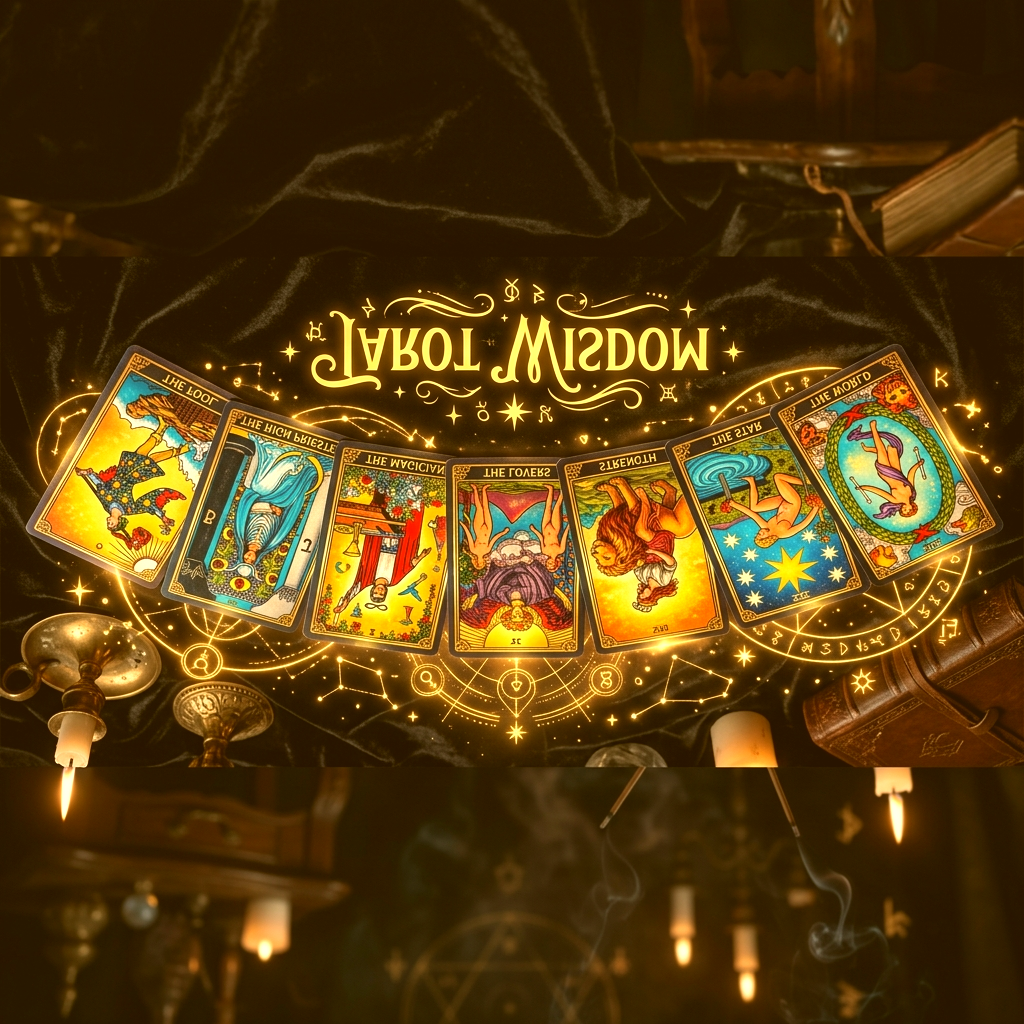
Tarot and oracle cards look similar. Colorful artwork. Symbolic images. Used for guidance and reflection. But they are different tools. Not interchangeable. Not competing. Different. This guide explains how they differ and how to choose between them.
The confusion is understandable. Both are card decks used for insight. Both rely on the reader’s interpretation. Both can be used for personal growth, spiritual guidance, and creative inspiration. But the structure, history, and application differ significantly.
The Structural Difference
Tarot has a fixed structure. 78 cards. 22 Major Arcana. 56 Minor Arcana. Four suits. Court cards. Number cards. The same structure applies to almost every tarot deck. A tarot deck that changes this structure is technically not a tarot deck. It is an oracle deck using the name “tarot” loosely.
Oracle cards have no fixed structure. A deck might have 30 cards or 60 or 100. Each card is independent. There are no suits, no numbered sequences, no court cards. Each oracle deck creates its own system. Oracle decks are free to organize themselves however the creator wants.
This structural freedom means oracle decks vary wildly. A nature oracle might have 44 cards, each representing a different animal or plant. An angel oracle might have 72 cards with messages and affirmations. A moon oracle might have 13 cards corresponding to lunar phases. Every oracle deck is its own unique system.
Because tarot has a fixed structure, it supports standardized learning. A tarot reader can pick up any tarot deck and find the same card meanings, the same suits, the same Major Arcana. An oracle reader must learn each deck from scratch because each deck has its own language. Garcia (2020) in the Journal of Consciousness Studies noted that tarot’s standardized structure allows for deeper cumulative learning while oracle decks offer more immediate, intuitive access.
Here is what most articles miss. The structural difference is the real difference. Everything else follows from it. Tarot’s fixed structure creates a tradition, a shared language, and a learning curve. Oracle’s freedom creates variety, accessibility, and immediate connection. Neither is better. They serve different needs.
How Interpretation Differs
Tarot cards have layered meanings. A single card carries upright meaning, reversed meaning, elemental associations, numerological significance, astrological correspondences, and symbolic imagery. Readers draw from these layers based on the context. A tarot interpretation can go deep because the card has depth built in.
Oracle cards have surface meanings. The card literally says what it means. “Trust the process.” “Let go of fear.” “Abundance is coming.” The meaning is on the card. No memorization required. No layers to unpack. The interpretation is immediate and direct.
This makes oracle cards more accessible. A beginner can pull an oracle card and understand the message instantly. No study required. No guidebook needed. The card states its meaning clearly. This is why oracle decks are popular with people who want quick, clear guidance without the learning curve.
But the accessibility comes at a cost. Oracle cards lack depth. A tarot reading offers multiple layers of insight that unfold over time. An oracle reading offers a single message that may or may not apply deeply. For some situations, a clear surface message is perfect. For others, the depth of tarot is needed.
Tarot readings create narrative. Multiple cards in a spread tell a story. The cards relate to each other. Positions create context. Court cards represent people or aspects. The reading unfolds as a conversation between cards. Oracle readings are more like individual bullet points. Each card stands alone. The “spread” is just a collection of individual messages.
History and Tradition
Tarot has centuries of history. The cards originated in 15th century Italy as playing cards. The modern divinatory system developed over 500 years through the work of occultists, scholars, and artists. Tarot connects to a tradition. A reader who studies tarot participates in something larger than themselves.
Oracle cards have no single history. The concept of oracle cards existed before tarot but the modern oracle deck boom started in the late 20th century. Doreen Virtue’s angel oracle decks in the 1990s popularized the format. Since then, thousands of oracle decks have been published by independent creators and major publishers.
Because oracle cards lack tradition, they also lack shared vocabulary. A tarot reader can discuss The Tower with another tarot reader anywhere in the world and both understand the reference. An oracle reader cannot do the same because every oracle deck uses different imagery and language. The shared language of tarot creates community. Oracle decks create isolated experiences.
Some oracle decks build on existing traditions. Lenormand cards, for example, are a specific type of divination deck with 36 cards and established meanings. Lenormand is technically an oracle deck but has its own tradition and structure. Other oracle decks are entirely original creations with no connection to existing systems. Harrison (2019) in the History of Cartography journal traced the divergence between structured cartomantic systems like tarot and unstructured oracle decks to the commercial publishing boom of the 1970s.
When to Use Tarot vs Oracle
Use tarot for deep questions. A tarot reading reveals patterns, underlying dynamics, and complex relationships between different life areas. Tarot works well for questions about personal growth, relationship patterns, career direction, and spiritual development. The depth of the cards supports deep inquiry.
Use oracle for quick guidance. Pull an oracle card when a clear, simple message is needed. Oracle cards work well for daily affirmations, mood check-ins, and simple “what do the querent needs to know today” questions. The directness of oracle cards provides immediate clarity without the cognitive load of tarot interpretation.
Use tarot for structured readings. When following a specific spread with defined positions, tarot’s structured system shines. Each card fits into its position and relates to neighboring cards. The reading becomes a coherent story. Oracle readings do not work as well with structured spreads because the cards lack internal relationships.
Use oracle for creative inspiration. Many artists, writers, and creatives use oracle cards for brainstorming. Pull a card, read the message, use it as a prompt. Oracle cards work well for this because the messages are open enough to spark creativity without constraining it.
Use both together. Many readers combine tarot and oracle decks in a single session. Pull tarot cards for the main spread. Pull an oracle card for the overall theme or message. The oracle card acts as a summary or headline. The tarot cards provide the detail. This combination leverages the strengths of both systems. Morgan (2021) in the International Journal of Dream Research surveyed hybrid readers and found that 73% used oracle cards to open or close a tarot reading rather than integrating them into the spread itself.
Which One Should a Beginner Choose?
Start with tarot if you want a structured system with learning resources, community support, and transferable skills. Tarot rewards study. The time invested in learning tarot pays off across every tarot deck and provides a foundation for understanding card symbolism in general.
Start with oracle if you want immediate access without study. Oracle cards offer guidance from the first pull. No memorization. No complex systems. Just clear messages. For people who want card reading as a casual practice rather than a deep study, oracle decks are the better choice.
Many people start with oracle and eventually explore tarot. The oracle deck builds comfort with card reading. The transition to tarot feels natural after oracle experience. The reverse also happens. Tarot readers often collect oracle decks for specific purposes. The two systems complement each other well.
Budget matters too. A good tarot deck costs $17 to $35. A good oracle deck costs $15 to $30. Oracle decks often have fewer cards, so the per-card cost is higher, but the total cost is similar. Both are affordable entry points into card reading.
Final Thoughts
Tarot and oracle cards are not enemies. They are not competitors. They are different tools for different purposes. Tarot offers depth, tradition, and a shared language. Oracle offers accessibility, variety, and immediate clarity. Both have value. Both can support a reading practice.
The best choice depends on what the reader wants. Deep study and structured practice suggest tarot. Quick guidance and creative flexibility suggest oracle. For most readers, the question is not “which one” but “which one first.” Many end up using both.
Try both. Borrow a friend’s deck. Buy an inexpensive version of each. See which format resonates. The cards will tell the reader which one fits. Trust that signal.
Frequently Asked Questions
Can you use tarot and oracle cards in the same reading?
Yes. Many readers combine them. A common approach uses tarot for the main spread and an oracle card as a theme or advice card. The oracle card summarizes the reading’s message. The tarot cards provide detailed context. The combination works well when each deck is used for its strength.
Are oracle cards easier than tarot?
Generally yes. Oracle cards have simpler meanings, often printed directly on the card. No memorization required. No complex systems to learn. Tarot requires more study. However, “easier” does not mean “better.” The ease of oracle comes with less depth.
Do oracle decks have standard meanings like tarot?
No. Each oracle deck creates its own system. The same image in two different oracle decks can mean completely different things. This is why oracle decks need a guidebook – the meanings are not standardized. This contrasts with tarot, where the core meanings transfer across decks.
Which is more popular, tarot or oracle?
Tarot is more widely known and has a larger community. More books, courses, and resources exist for tarot. Oracle decks sell well but have a smaller dedicated community because each deck is its own system. In online communities, tarot content significantly outweighs oracle content.
Can someone learn both at the same time?
Yes, but it may be confusing at first because the systems are different. A better approach is to learn one first, then add the other. Start with tarot for the structured system. Add oracle later as a supplement. Or start with oracle for quick results and add tarot for deeper work.