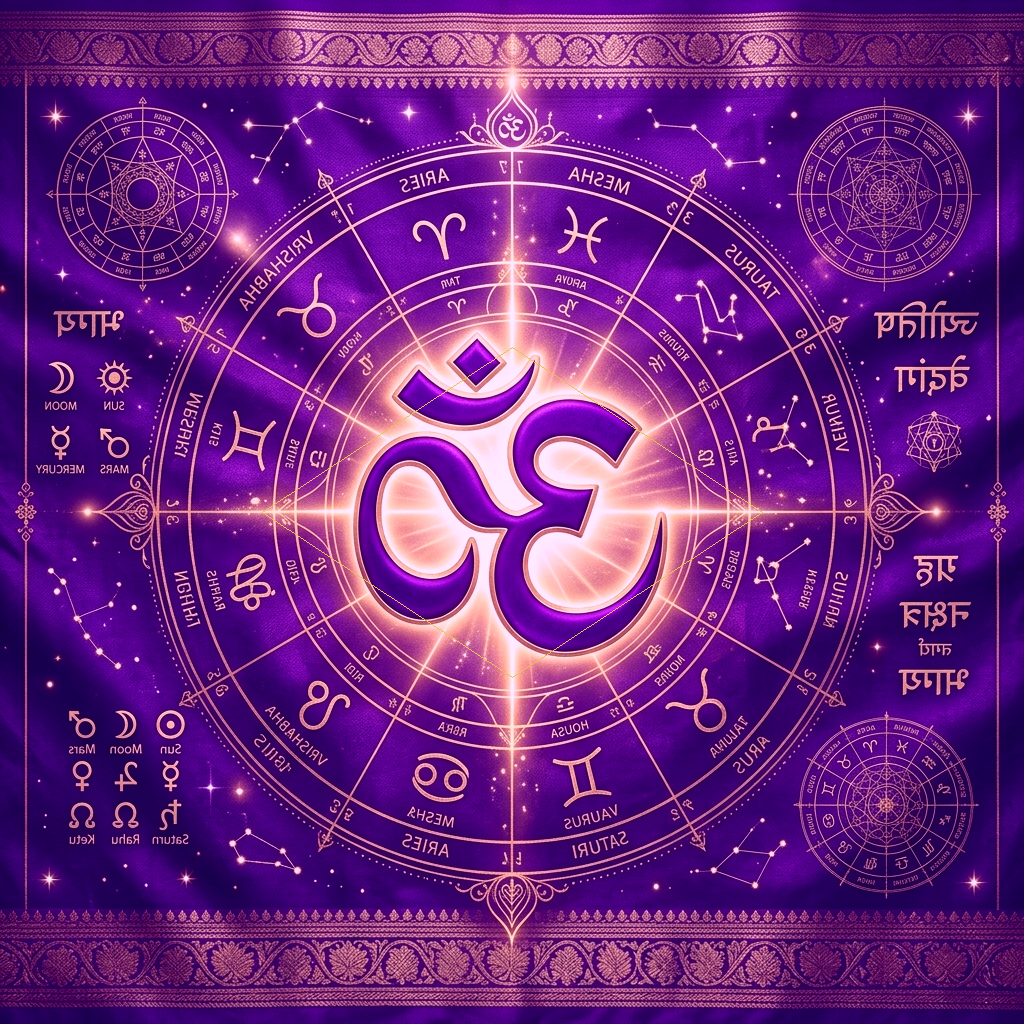
Planetary aspects, or Drishti, dictate the flow of energy between Grahas. These visual connections bridge the gap between individual Bhavas, weaving the complexity of a horoscope into a coherent narrative. Every planet casts a gaze. This gaze alters the natural quality of the receiving Rashi and Bhava.
The standard aspect is the seventh house gaze. This is a direct exchange. A planet looks across the zodiac to the house directly opposite its position. This gaze is mutual. It creates a bridge of influence that balances the qualities of the two houses involved. The strength of this bridge depends on the dignity of the planets. Exalted planets bring order, debilitated planets bring chaos. Simple logic.
Special aspects belong to specific Grahas. Mars casts a gaze to the fourth and eighth houses from its position. This is a piercing influence, it demands action. It creates friction. Mars does not simply look; it intervenes. The fourth house aspect of Mars disturbs the peace of the home. The eighth house aspect creates sudden shifts in shared resources or longevity concerns. These aren’t passive events.
The Nature of Saturn and Jupiter
Saturn casts its gaze upon the third and tenth houses from its location. These are houses of effort and external visibility. Saturn is the planet of duration and limitation. Its gaze is heavy. It requires time. It demands that the individual work for the results promised in those houses. Where Saturn looks, there’s a delay, there’s also a requirement for profound maturity.
Jupiter provides the counterweight. Its aspects fall on the fifth and ninth houses from its position. These are houses of Dharma and higher knowledge. Jupiter brings expansion. Its gaze nurtures. It provides the wisdom to navigate the challenges presented by other, more difficult planets. Where Jupiter looks, there is grace. There is a sense of purpose that transcends the mundane.
Wait, does the aspect of a malefic planet always indicate misfortune?
Not necessarily. Malefics provide the impetus for growth through struggle. A malefic aspect upon a Kendra house can create a powerful Raja Yoga. It forces the native to confront obstacles. Success attained through such pressure is often more durable. The quality of the aspect depends on the Rashi occupied by the aspecting planet. A planet in its own sign or an exaltation sign casts a benevolent gaze even if its nature is naturally harsh.
Interaction with the Lagna and Dasha
The Lagna serves as the filter for all planetary aspects. The physical body and the direction of life are dictated by the health of the Lagna and its lord. When a planet aspects the Lagna, its energy becomes the primary focus of the native. The individual embodies the qualities of that planet. It’s not just an external event, it is a personality trait.
Dasha periods activate these aspects. A planet may be present in a chart for years, but its influence remains dormant until its Dasha begins. Once the Dasha starts, the aspects cast by that Graha become the dominant reality. The house receiving the aspect comes alive. Events begin to unfold. The Dasha serves as the trigger for the potential stored in the aspects.
Divisional charts provide the finer details. A planet may appear strong in the Rashi chart but weak in the Navamsha. Aspects in the D9 chart reveal the internal reality. They show the secret motivations of the soul. A planet might aspect a house in the Rashi chart, but if that same planet is afflicted in the divisional charts, the outward result will be hollow. Depth requires verification across multiple layers.
Nakshatras and Upagrahas
The Nakshatras define the texture of the aspect.
Upagrahas add shadows to the interpretation. These invisible points, such as Gulika or Mandi, cast their own dark aspects. They’re the hidden shapes. When a primary Graha aspects a house occupied by an Upagraha, the nature of that house becomes corrupted or obscured. These shapes are often overlooked by casual observers. They are key for understanding the setbacks that defy simple logic.
Yogas form when specific Grahas aspect each other or occupy specific Bhavas. These combinations create distinct paths for the native. A Parivartana Yoga, or exchange of signs, acts as a permanent aspect. The two planets are linked forever. They trade their energies. They become co-dependent. This is a subtle but powerful connection that overrides standard Drishti rules.
The Role of Retrogression
Retrograde planets behave differently, their aspects are intensified. A retrograde planet is closer to the earth. Its influence is more personal. It brings past issues back to the surface. It demands a revisit of old lessons. The aspect of a retrograde planet isn’t about the future. It’s about clearing the debt of the past.
Consider the placement of the nodes. Rahu and Ketu don’t cast traditional aspects in the same manner as the seven visible Grahas. They exert a constant pressure on the houses they occupy and the houses they aspect. Rahu creates obsession. Ketu creates detachment. Their influence is disruptive, it pulls the native away from the conventional path. It creates a hunger that’s difficult to satisfy.
There’s a constant dialogue between the planets.
Observing the Patterns
The study of aspects requires a patient mind. One must look beyond the immediate event. The patterns repeat. They echo through the Dasha cycles. The wise observer watches the interplay of these forces over time. The movement of the heavens is a silent language. It speaks in the geometry of lines cast across the chart.
There’s no benefit in rushing the interpretation. Each house has a story. Each planet has a role. The aspects are the punctuation marks in the sentence of a life. They provide the pauses and the emphases. They tell the native where the effort must go. They show where the reward will be found.
The chart is a map of potential. The aspects show the roads. Some are straight and smooth. Others are winding and steep, the traveller must choose the path. The planets provide the weather and the terrain. They don’t dictate the pace of the walk. That remains the domain of the individual will.
Quiet reflection brings clarity. The patterns emerge from the noise. The dance of the planets continues regardless of human concern. It is a vast and orderly system. One observes the rhythm. One accepts the cycle. The stars move in their designated courses, everything arrives when it is meant to arrive.