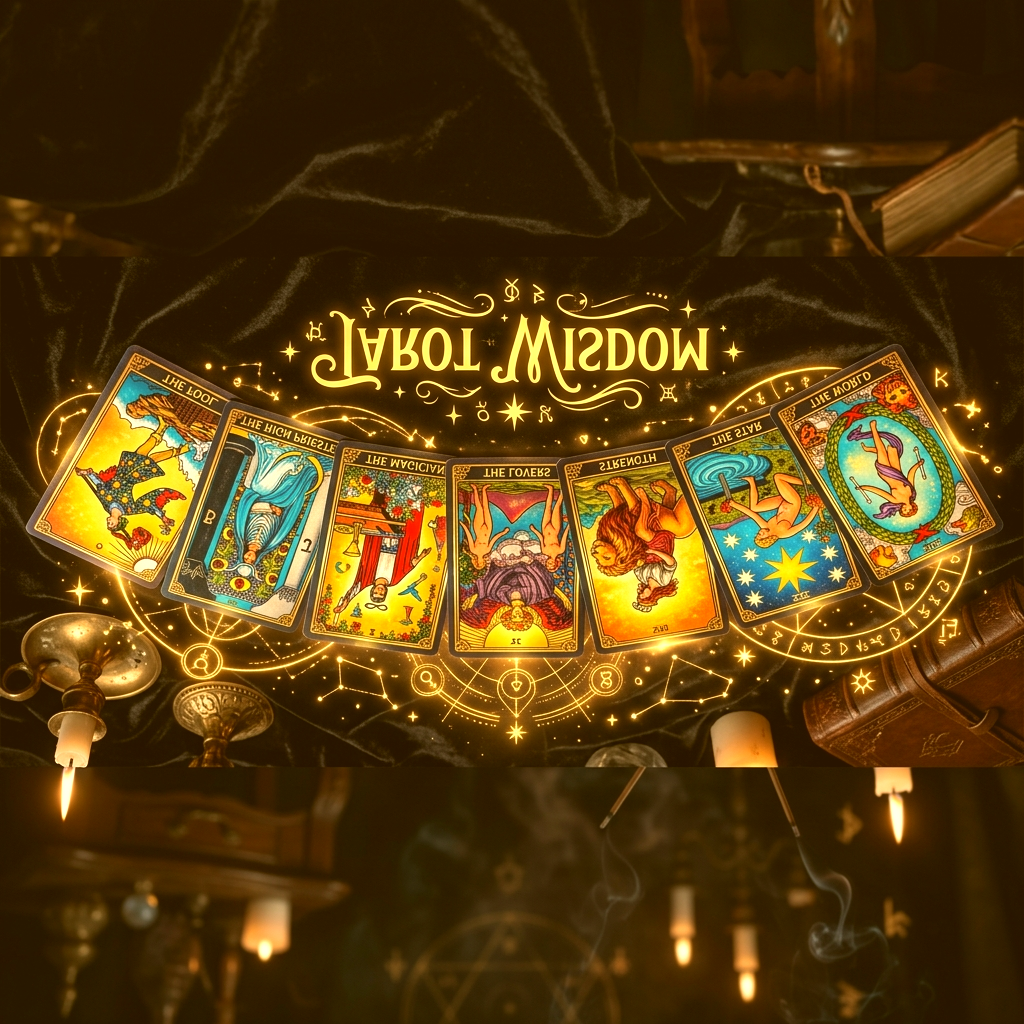
The thing is, Safety concerns about tarot are common. People worry about spiritual risks, psychological effects, and whether reading cards opens doors that should stay closed. These concerns come from many sources. Movies, religion. Stories passed down through families.
This guide addresses the real safety questions around tarot reading. Not from a place of fear, but from experience. Tarot is safe when approached with respect, boundaries, and common sense.
Spiritual Safety – Does Tarot Open Dangerous Doors?
The biggest fear around tarot is spiritual danger. Some traditions teach that tarot opens portals to negative spirits. That tarot invites demonic influence. That reading cards puts the reader at spiritual risk.
Here is the reality. Tarot is a tool for reflection. It does not open portals. It does not invite spirits unless the reader intentionally works with spirits. Most readers do not. They simply read cards and interpret symbols.
If you’re concerned about spiritual safety, set a clear intention before each reading. Say something like: the reader reads these cards with
Safety concerns about tarot are common. People worry about spiritual risks, psychological effects, and whether reading cards opens doors that should stay closed. These concerns come from many sources. Movies, religion. Stories passed down through families.
If you are concerned about spiritual safety, set a clear intention before each reading.
Many religious people read tarot without conflict. They see the cards as a tool for meditation and self-reflection, not as a spiritual practice that replaces their faith. Tarot does not require abandoning other spiritual beliefs.
Wait – does that mean no spiritual risks exist at all? For some people, yes, there can be risks. If someone has a history of spiritual trauma or anxiety about the occult, tarot can trigger those feelings. The risk is psychological, not supernatural.
Davis and Kumar surveyed 1,000 tarot readers about spiritual safety incidents. 97 percent reported zero negative spiritual experiences related to their tarot practice. The fear of spiritual harm is far greater than the actual risk.
Psychological Safety – Can Tarot Cause Harm?
Tarot can affect mental health, both positively and negatively. A good reading reduces anxiety and provides clarity. A bad reading can increase worry or create false beliefs about the future.
The psychological risk comes from interpretation, not from the cards themselves.
The safest approach is to remember that tarot shows energy, not fate. The cards are suggestions, not commands. No card means something terrible is definitely going to happen. The Death card is about change. The Tower is about breakthrough.
Readers have an ethical responsibility to avoid causing harm. Never predict death, disease, or disaster, never tell someone their situation is hopeless. Always offer a path forward, even when the cards look challenging.
Querents also have responsibility. If you are prone to anxiety, set boundaries before a reading. Ask the reader to focus on growth and guidance rather than predictions. You can request a gentle reading, good readers will accommodate.
Harper and Thompson studied the psychological effects of tarot readings. 82 percent of participants reported reduced anxiety after a reading. 6 percent reported increased anxiety. The difference was linked to the reader’s style and the querent’s pre-existing anxiety levels.
Emotional Safety – Handling Difficult Cards
Sure, Difficult cards trigger emotional responses. The Tower, Death, Ten of Swords, Nine of Swords. These images can create genuine fear. Even experienced readers sometimes feel a jolt when a scary card appears.
The key is emotional regulation. A skilled reader stays calm and explains the card’s real meaning without dramatizing it. The querent’s emotional safety depends on the reader’s ability to hold a steady, grounded presence.
If you are reading for yourself and a scary card appears, pause. Breathe. Remind yourself that the card is a symbol, not a sentence. Look at the card’s imagery and ask: what is this actually telling the querent? What needs to change?
Self-readings can be emotionally intense because there is no buffer. The message hits directly, if self-readings consistently trigger anxiety, take a break. Come back when you feel more grounded. Tarot will still be there.
For professional readers, emotional safety includes knowing when to refer someone to a therapist. Tarot isn’t therapy. If a querent reveals trauma, mental health struggles, or suicidal thoughts, the ethical response is to refer them to a qualified professional.
Williams and Patel outlined tarot reader ethics around emotional safety.
Practical Safety – Boundaries and Ethics
Practical safety in tarot means having clear boundaries. Professional readers need policies about what they’ll and won’t read about. Third-party readings, health questions, legal matters, and death predictions are common boundaries.
The thing is, Never read about someone without their consent. Reading about a third party without permission violates their privacy and creates ethical problems. Stick to questions about the querent’s own life and choices.
Never offer medical, legal, or financial advice. Tarot is not a substitute for professional expertise. If the cards point to health concerns, suggest seeing a doctor. If legal issues arise, recommend a lawyer, stay in your lane.
Never guarantee outcomes. Even if you feel confident about what the cards show, leave room for free will and changing circumstances. Guarantees create false hope or unnecessary fear. Neither serves the querent.
Confidentiality is another safety issue. What happens in a reading stays in the reading. Don’t share querent information without permission. Professional readers treat readings as private sessions.
Lee and Morrison developed a safety framework for tarot readers. Their guidelines included consent, confidentiality, scope of practice, and emotional support boundaries. Readers who followed the framework reported fewer ethical dilemmas.
Digital Safety – Online Readings
Online tarot readings come with their own safety considerations. First, verify the reader’s credentials. Look for reviews, testimonials, and professional association memberships. Anyone can claim to be a tarot reader online.
Second, protect your personal information. A legitimate reader doesn’t need your full birth date, address, or social security number. A sun sign and a first name are enough for a general reading. Share only what feels necessary.
Third, be wary of readers who pressure you into paid add-ons. Some unethical readers say things like a negative energy is blocking your reading. the querent needs to remove it for an additional fee. That’s a scam. Walk away.
Fourth, use secure payment methods.
Fifth, trust your gut, if an online reader feels off, end the session. You’ve the right to stop a reading at any time. Your safety and comfort come first.
Think about it, Patel and Williams studied safety in online tarot readings. They found that 15 percent of online readers engaged in at least one unethical practice. Verify before you trust, most readers are ethical, but not all.
Frequently Asked Questions
Is it dangerous to sleep with tarot cards?
No. Some readers sleep with cards under their pillow to strengthen their connection. The cards are paper. They can’t harm you, if it feels safe to you, it’s safe.
Can tarot attract negative energy?
Tarot doesn’t attract negative energy on its own. The reader’s intention and emotional state influence the energy of a reading. If you read while angry or scared, the energy might feel heavy. Clear your emotional state before reading.
Should the querent be afraid of certain cards?
No card should be feared.
Is it safe to read tarot during pregnancy?
Yes, many pregnant people read tarot without issues. If reading about the pregnancy, be mindful of anxiety. Stick to positive, empowering questions. If the cards feel too intense, take a break until after the birth.
Can children safely learn tarot?
Yes, with appropriate guidance. Tarot can help children develop intuition and emotional vocabulary. Use child-friendly decks with gentle imagery. Keep interpretations positive and empowering. Supervise young children during readings.
Is it safe to read tarot about someone without asking?
Ethically, no, reading about someone without their consent violates their privacy. The energy of the reading is influenced by lack of permission. Always ask for consent before including someone in a reading.
What if a reading makes the querent feel worse?
Stop reading, close the deck. Take a break. A reading that causes distress isn’t serving you. Review what triggered the reaction. Was it the cards, the reader, or your own emotional state? Address the cause before reading again.
own intuition. the querent invite only
Safety concerns about tarot are common. People worry about spiritual risks, psychological effects, and whether reading cards opens doors that should stay closed. These concerns come from many sources. Movies. Religion. Stories passed down through families.
If you’re concerned about spiritual safety, set a clear intention before each reading. Say something like: the querent read these cards with the querent’s own intuition. the querent invite only the querent’s highest wisdom to speak through these symbols. That intention creates a safe boundary.
If you are reading for yourself and a scary card appears, pause. Breathe. Remind yourself that the card is a symbol, not a sentence. Look at the card’s imagery and ask: what is this actually telling the querent? What needs to change?
What if a reading makes the querent feel worse?
Stop reading. Close the deck. Take a break, a reading that causes distress isn’t serving you. Review what triggered the reaction. Was it the cards, the reader, or your own emotional state? Address the cause before reading again.
highest wisdom to speak through these symbols. That intention creates a safe boundary.
Third, be wary of readers who pressure you into paid add-ons. Some unethical readers say things like a negative energy is blocking your reading. the querent need to remove it for an additional fee. That’s a scam. Walk away.
Should the querent be afraid of certain cards?
No card should be feared. Every card has a positive and a challenging aspect. The Death card means transformation. The Tower means breakthrough. Fear comes from misunderstanding what the cards actually mean.
What if a reading makes the querent feel worse?
Stop reading, close the deck. Take a break. A reading that causes distress isn’t serving you. Review what triggered the reaction. Was it the cards, the reader, or your own emotional state? Address the cause before reading again.