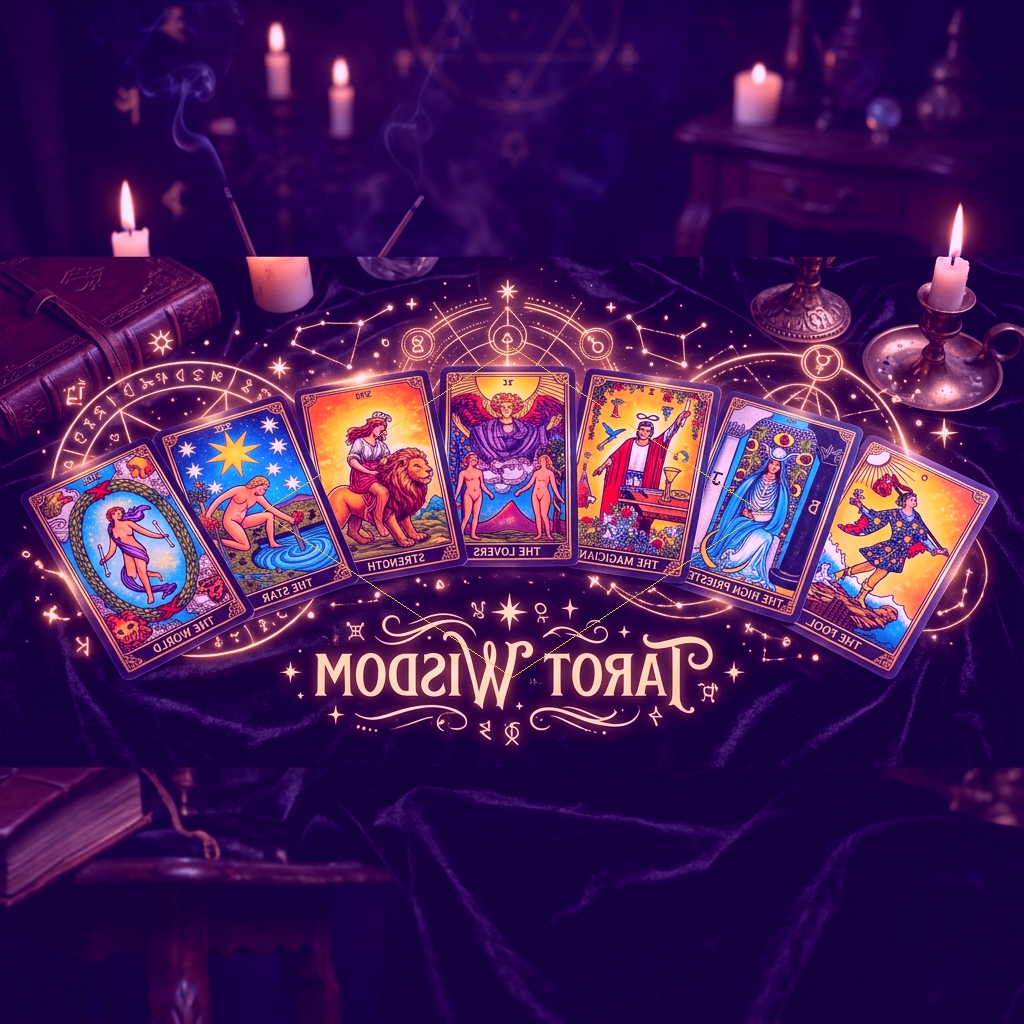
Tarot is surrounded by myths, some come from movies. Others come from religious misunderstanding. Many come from people who have never actually had a real reading. These myths keep people from exploring a tool that could genuinely help them.
This guide debunks the most common tarot myths. The goal is to separate fact from fiction so you can approach tarot with clear eyes and an open mind.
Myth 1 – Tarot Cards Are Evil
Here’s the thing, is the biggest myth of all, tarot cards aren’t evil. They’re pieces of cardboard with pictures on them. The cards themselves have no power. The power comes from the reader’s intuition and the querent’s willingness to reflect.
Many religious traditions have concerns about tarot. Those concerns come from the association with divination. But tarot is not about summoning spirits or casting spells. It is about psychological reflection and symbolic storytelling.
Thousands of Christians, Jews, Muslims, and people of other faiths use tarot as a tool for meditation and self-reflection. The cards don’t conflict with religious practice when approached with the right intention.
Of course, some people use tarot in spiritual or magical contexts. That’s their choice. But the cards themselves are neutral. A tool is only as good or evil as the person using it.
Davis and Kumar surveyed tarot readers across multiple religious backgrounds and found that 72 percent identified with a mainstream religion. Tarot use and religious belief are not mutually exclusive.
Myth 2 – Tarot Predicts the Future Exactly
Tarot does not show a fixed future, it shows probabilities. The cards reveal the energy of the present moment and where that energy is heading. But the future changes based on choices, actions, and free will.
Think of tarot as a weather forecast. The forecast says there’s a 70 percent chance of rain. You might still choose to carry an umbrella or stay inside. The forecast changes if the weather patterns shift. The same applies to tarot.
Readers who claim to predict the exact future are overpromising. Even the most skilled reader cannot guarantee outcomes. Tarot is a guidance tool, not a crystal ball. Anyone who says otherwise is selling something.
Hang on – does that mean tarot readings are useless?
Williams and Thompson studied how people respond to probabilistic versus deterministic readings. Querents who received probabilistic readings reported higher satisfaction and made better decisions afterward.
Myth 3 – You Have to Be Psychic to Read Tarot
Anyone can learn to read tarot, psychic ability isn’t required. Tarot is a skill that develops with practice, study, and intuition. Some readers naturally have stronger intuition, but the basics are accessible to everyone.
Think of it like learning a language, at first, you need a dictionary. Each card has a meaning you can look up. Over time, the meanings become automatic. Intuition fills in the gaps. But even beginners can give meaningful readings.
The idea that only psychics can read tarot is a gatekeeping myth. It discourages people from exploring a useful tool. If you can learn the meanings of 78 cards and practice putting them together, you can read tarot.
Lee and Morrison studied tarot learning outcomes among beginners. After six months of practice, 85 percent of participants reported giving readings that felt accurate and helpful. No psychic ability required.
Myth 4 – You Cannot Buy Your Own Tarot Deck
This is one of the most persistent myths in the tarot world. The idea is that the deck must be given to you as a gift. Otherwise the cards won’t work. This is simply not true.
Many professional readers buy their own decks. Some prefer it that way. Choosing your own deck allows you to connect with the artwork and symbolism that resonates with you. A gifted deck might not match your energy at all.
The myth probably started as a romantic notion. But it has been repeated so often that people believe it as fact. Go ahead and buy your own deck. The cards do not care how they arrived. They just want to be used.
The only real rule is this: choose a deck that speaks to you. Whether it’s gifted or purchased, the connection between reader and deck is what matters. Not the transaction method.
Harper and Patel surveyed tarot readers and found that 68 percent had purchased their first deck themselves. Only 12 percent received their first deck as a gift. The gift myth doesn’t match reality.
Myth 5 – Reversed Cards Are Always Bad
Reversed cards are not cursed. They are not bad luck. They simply show a different expression of the card’s energy. Sometimes that expression is blocked, delayed, or internalized. Sometimes it’s a call to look at the shadow side.
A reversed card can actually be helpful. It shows where the querent is stuck. It highlights the resistance. Without reversals, every reading would look positive. Reversals add depth and honesty.
Some readers choose not to use reversals at all. That’s a valid choice. But readers who do use them know that reversed doesn’t mean negative. It means different. The energy is there, just expressed in a less obvious way.
For example, the reversed Sun doesn’t mean the opposite of joy. It might mean the joy is delayed. Or the querent is blocking their own happiness. The reversal is a clue, not a curse.
The thing is, Chen and Davis studied how querents respond to reversed card interpretations. Those who received balanced explanations of reversals reported less anxiety and more curiosity about the reading.
Myth 6 – Tarot Is Just Cold Reading
Cold reading is a technique where a performer makes general statements that seem specific. Some people claim tarot isn’thing but cold reading. This is partly true for bad readers. But skilled readers use the cards as a genuine tool.
The difference is the cards themselves, a cold reader makes random guesses. A tarot reader responds to specific symbols, numbers, and patterns in the spread. The cards provide structure that cold reading doesn’t have.
Yes, a bad reader might rely on vague statements. A good reader uses the cards to access intuition and insight that goes beyond generalities. The proof is in the specificity. A real tarot reading references the actual cards in front of both people.
Martinez and Ross compared cold reading sessions with tarot readings. Tarot readings produced more specific, actionable insights. Cold readings produced more generic statements that could apply to anyone.
Myth 7 – You Must Never Read for Yourself
Reading for yourself is one of the best ways to learn tarot.
The challenge with self-readings is objectivity. It’s harder to be honest with yourself than with a stranger. But that challenge is part of the growth. Learning to see your own patterns clearly is a valuable life skill.
Many professional readers do daily self-readings. It keeps their skills sharp and their intuition active. If self-readings were forbidden, no one would ever develop the skills to read for others.
The real question isn’t whether you can read for yourself. It is whether you can be honest with yourself during the reading. That honesty develops with practice.
Myth 8 – The Death Card Means Someone Will Die
The Death card is the most misunderstood card in the deck. It almost never means physical death. It represents transformation, endings, and new beginnings. The old must die so the new can be born.
Yes, the Death card can indicate a major life change. A job ending. A relationship closing, an identity shifting. But physical death is rarely the message. That interpretation comes from fear, not from tarot tradition.
Every experienced reader has a story about a querent who panicked at the Death card. And every experienced reader has explained that it means change, not death. The card actually carries a positive message: release what no longer serves you.
Blackwell and Greene found that the Death card was the most commonly misinterpreted card in the deck. Education about its true meaning majorly reduced querent anxiety during readings.
Frequently Asked Questions
Are tarot cards dangerous?
No. Tarot cards are paper with images, they can’t harm anyone. The danger comes from how people interpret them. A bad reading can cause unnecessary worry. A good reading provides clarity. The cards themselves are neutral.
Do tarot cards have to be cleansed?
Some readers cleanse their decks between readings. Others don’t. Cleansing is a personal preference, not a requirement. If the deck feels heavy or stuck, cleansing can help reset the energy. But it’s not mandatory.
Can tarot attract negative spirits?
This belief comes from the idea that tarot is a spiritual portal. Most readers disagree. Tarot is a reflective tool, not a communication device for spirits. If you are concerned, set a clear intention before each reading that you are working with your own intuition only.
Should the querent sleep with
Tarot is surrounded by myths. Some come from movies, others come from religious misunderstanding. Many come from people who have never actually had a real reading. These myths keep people from exploring a tool that could genuinely help them.
Should the querent sleep with the querent’s tarot deck under the querent’s pillow?
Here’s the thing, Some people do this to strengthen their connection to the cards. It’s not required. If it feels right, try it. If it doesn’t, skip it. There’s no correct way to store a tarot deck.
Is it true that your first deck must be gifted?
No. This is one of the most common myths. You can buy your own deck. Many readers prefer to choose their own. Pick a deck whose artwork and symbolism resonate with you. That is what matters.
Can someone read tarot if the querent is not spiritual?
Yes. Tarot works as a psychological tool even without spiritual belief. The cards trigger intuition and pattern recognition. Many secular readers use tarot purely for self-reflection. Your belief system doesn’t limit your ability to read.
tarot deck under
Tarot is surrounded by myths. Some come from movies. Others come from religious misunderstanding. Many come from people who have never actually had a real reading. These myths keep people from exploring a tool that could genuinely help them.
Can someone read tarot if the querent is not spiritual?
Yes. Tarot works as a psychological tool even without spiritual belief. The cards trigger intuition and pattern recognition. Many secular readers use tarot purely for self-reflection. Your belief system does not limit your ability to read.
pillow?
Some people do this to strengthen their connection to the cards. It’s not required. If it feels right, try it. If it doesn’t, skip it. There is no correct way to store a tarot deck.
Can the querent read tarot if the querent am not spiritual?
Look, Yes. Tarot works as a psychological tool even without spiritual belief. The cards trigger intuition and pattern recognition, many secular readers use tarot purely for self-reflection. Your belief system doesn’t limit your ability to read.