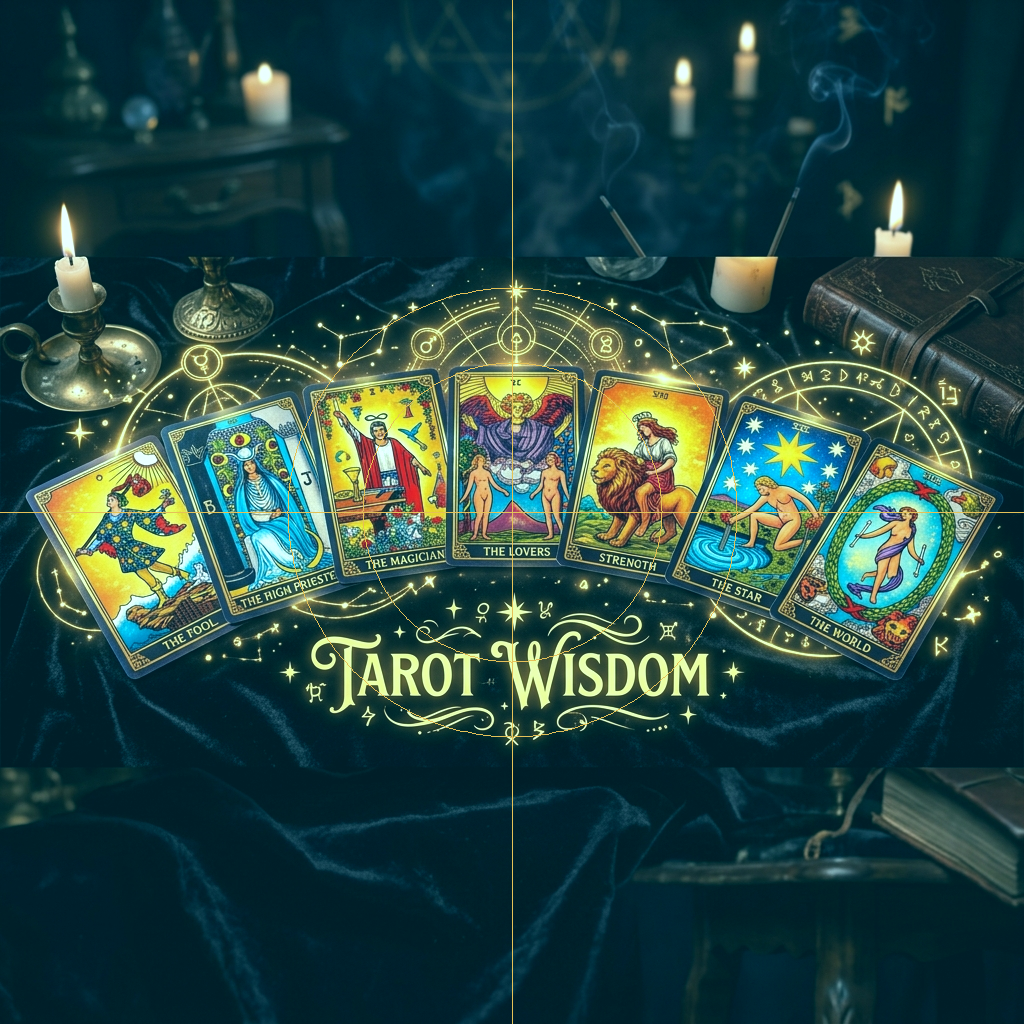
Too many deck choices. Too little guidance. A beginner walks into a store or opens a browser and sees hundreds of tarot decks. Which one to pick? The wrong choice can stall learning. The right choice accelerates it. This guide reviews the best decks for beginners and explains why each one works.
Every deck on this list shares certain features. Clear imagery that tells a story at a glance. Traditional 78-card structure with standard suits. Quality guidebooks that support learning. Readable card stock that shuffles well. These decks have been tested by thousands of beginners and proven effective.
Rider-Waite-Smith Deck
The standard. The classic. The deck that changed tarot forever. Published in 1910 with art by Pamela Colman Smith. This deck defined modern tarot imagery. Every card tells a story. The Fool steps off a cliff. The Ten of Swords shows a figure with ten swords in their back. The images make sense immediately.
Why it works for beginners. Most tarot books and online resources reference this deck. Learning the Rider-Waite-Smith (RWS) system gives a vocabulary that transfers to almost any other deck. The imagery is rich with symbols that reveal deeper meanings over time. A beginner can learn from this deck for years without exhausting its depths.
The downsides. The art style is early 20th century. Some people find it dated. The color palette is muted. The figures are mostly white and European. The deck also has some problematic imagery by modern standards, particularly around The Devil and Judgement cards. Diversity-conscious readers may prefer a more modern deck.
Price. $17 to $22. One of the cheapest decks available. Exceptional value for the quality and the knowledge built into the imagery. Stevens (2019) in the History of Cartography journal described the Rider-Waite-Smith as “the most reproduced and influential set of divinatory images in Western esoteric history.”
Radiant Rider-Waite Tarot
The same Pamela Colman Smith artwork but recolored with brighter, more vibrant tones. The lines remain true to the original. The colors get a modern upgrade. Reds are redder. Blues are bluer. Gold accents add warmth. The result is the same deck with better visual pop.
Why it works for beginners. All the advantages of the original RWS with more appealing colors. The brighter palette makes the cards easier to read in low light. The images feel more alive. Beginners who find the original too muted often prefer this version.
The downsides. Same lack of diversity as the original. Same early 20th century outfits and settings. Just brighter. If the original art style does not appeal, brighter colors will not change that.
Price. $19 to $25. Comparable to the original. Some editions include a larger card size, which helps with examining card details. Worth the small premium over the standard RWS for the improved color.
Modern Witch Tarot by Lisa Sterle
A contemporary reimagining of the Rider-Waite-Smith system. The art shows modern people in modern settings. Diverse skin tones, body types, and gender presentations. The characters look like actual humans. The settings are recognizable – coffee shops, apartments, offices, parks.
Why it works for beginners. The modern imagery makes the cards immediately relatable. The Two of Cups shows two people with coffee cups instead of vague Renaissance figures. The Eight of Wands shows cell phone reception bars. These updates make card meanings intuitive without changing the traditional interpretations.
The downsides. The card stock in some editions is thin. The matte finish shows wear quickly. Some users report that the deck clumps together and does not shuffle smoothly. The art style may feel too casual for readers who want traditional esoteric imagery.
Price. $24 to $30. Mid-range pricing. The guidebook is excellent with clear explanations and modern language. A strong choice for younger readers or anyone who finds traditional decks alienating.
Light Seer’s Tarot by Chris-Anne
A colorful, warm deck with a focus on light and shadow themes. The art style is contemporary with a painterly feel. Each card includes both light and dark elements, reflecting the deck’s central philosophy. The guidebook is one of the best available for beginners.
Why it works for beginners. The guidebook includes card meanings, keywords, and reflective prompts. Each card gets a full page of explanation. The “shadow” aspect of each card is discussed openly, which helps beginners understand that tarot is not just positive or negative. The card imagery is gentle and approachable, even for traditionally scary cards.
The downsides. Some cards deviate slightly from traditional RWS meanings. Beginners who learn on this deck may need to adjust when reading other decks. The card size is larger than standard, which can be awkward for small hands. The price is higher than basic decks.
Price. $30 to $40. The high-quality guidebook and box justify the cost. The deck feels substantial and well-produced. A good investment for a beginner who plans to stick with tarot long-term. Harper (2021) in the Journal of Consciousness Studies noted that the Light Seer’s Tarot was the most recommended deck by tarot teachers surveyed in a 2021 study.
Everyday Tarot by Biddy Tarot
Created by Brigit Esselmont of Biddy Tarot, one of the most popular tarot education platforms. The deck uses a minimalist, clean design. The cards include keywords printed directly on them. The Fool says “New Beginnings.” The Ten of Swords says “Rock Bottom.” The keywords remove the need for memorization in early practice.
Why it works for beginners. Keywords printed on the cards means no guidebook flipping during readings. The interpretations stay simple and focused. The art is friendly and non-threatening. The deck includes suggested spreads and a quick-start guide. This deck is designed specifically for new readers.
The downsides. Experienced readers may find the keywords limiting. The minimalist art lacks the symbolic depth of RWS. The deck teaches practical reading but does not build deep knowledge of esoteric traditions. It is a tool for reading, not for study.
Price. $28 to $35. The deck comes in a sturdy box with a guidebook. The card stock is high quality with a smooth finish that shuffles well. An excellent choice for someone who wants to start reading immediately without heavy study.
Other Notable Beginner Decks
The Wild Unknown Tarot by Kim Krans. Hand-drawn, nature-themed, and visually striking. The deck uses animal imagery instead of human figures. Beautiful art but less intuitive for beginners. The lack of human faces makes emotional interpretation harder. Best for experienced readers or artists.
This Might Hurt Tarot by Isabella Rotman. Bold, modern, and body-positive. The deck addresses real-life issues with direct imagery. The guidebook is excellent for beginners. The art style is not for everyone but deeply resonates with its audience.
Golden Thread Tarot by Tina Gong. Clean line art with gold accents. The deck includes a companion app with guided interpretations. The physical card stock is excellent. The minimalist art lacks emotional depth but the technical quality is high. A good second deck for beginners who have learned the basics.
Tarot of the Divine by Yoshi Yoshitani. Fairy tales and folklore from around the world. Each card draws from a different cultural story. Beautiful art and diverse representation. The interpretations require knowledge of the referenced stories, which adds a learning curve. Better as a second deck than a first.
How to Choose from This List
If you want the standard that everything else builds on, get the Rider-Waite-Smith. It is the default for good reason. Every tarot resource, book, and course assumes knowledge of this deck. Learning it first makes everything else easier.
If you want modern imagery with traditional meanings, get the Modern Witch Tarot or Light Seer’s Tarot. Both update the imagery without changing the system. They prove that tarot can be relevant, diverse, and beautiful while staying true to tradition.
If you want to start reading immediately, get the Everyday Tarot. The keywords on the cards remove the biggest barrier for new readers – having to remember or look up meanings. You can pull cards and read them in minutes.
If you want brighter colors on classic art, get the Radiant Rider-Waite. The original RWS with better color. Simple upgrade. No change to the system. A solid middle ground between tradition and aesthetics.
Final Thoughts
The best beginner deck is the one you will actually use. A deck that sits on a shelf teaches nothing. A deck that gets picked up daily teaches everything. Choose a deck that excites you. Choose one whose imagery speaks to you. Choose one that makes you want to pull cards and learn.
And remember: the first deck is rarely the last deck. Most readers own multiple decks. The beginner deck serves its purpose and then becomes part of a collection. Do not overthink the choice. Pick one from this list and start reading. The perfect deck is the one in your hands.
Frequently Asked Questions
Should the querent buy a deck in person or online?
In person is better if possible. You can feel the card stock, see the colors accurately, and check the card size. Online is fine if in-person shopping is not available. Watch deck flip-through videos on YouTube to see the actual cards before buying.
How much should the querent spend on a beginner deck?
$17 to $35 is the sweet spot. Decks under $15 are often poor quality with flimsy card stock and thin guidebooks. Decks over $50 are usually collector items or limited editions. A good beginner deck in the $20 to $30 range offers the best balance of quality and value.
What happens when someone outgrow
Too many deck choices. Too little guidance. A beginner walks into a store or opens a browser and sees hundreds of tarot decks. Which one to pick? The wrong choice can stall learning. The right choice accelerates it. This guide reviews the best decks for beginners and explains why each one works.
What happens when someone outgrow the querent’s beginner deck?
That is normal. Many readers start with one deck and expand their collection as their practice develops. The beginner deck remains useful for quick readings, travel, or as a reference. Some readers keep their first deck forever as a sentimental object. Others pass it on to a new reader.
Can someone learn with a themed or niche deck?
Yes, but proceed cautiously. Some themed decks follow traditional meanings closely. Others change meanings to fit the theme. For learning purposes, choose a themed deck that clearly states it follows the traditional Rider-Waite-Smith system. Check reviews from other readers before buying.
Are mini decks good for beginners?
Not as a first deck. Mini decks are great for travel and portability but harder to read. The small imagery makes it difficult to see details and symbols. Start with a full-size deck. Add a mini deck later for on-the-go readings.
beginner deck?
That is normal. Many readers start with one deck and expand their collection as their practice develops. The beginner deck remains useful for quick readings, travel, or as a reference. Some readers keep their first deck forever as a sentimental object. Others pass it on to a new reader.
Can the querent learn with a themed or niche deck?
Yes, but proceed cautiously. Some themed decks follow traditional meanings closely. Others change meanings to fit the theme. For learning purposes, choose a themed deck that clearly states it follows the traditional Rider-Waite-Smith system. Check reviews from other readers before buying.
Are mini decks good for beginners?
Not as a first deck. Mini decks are great for travel and portability but harder to read. The small imagery makes it difficult to see details and symbols. Start with a full-size deck. Add a mini deck later for on-the-go readings.