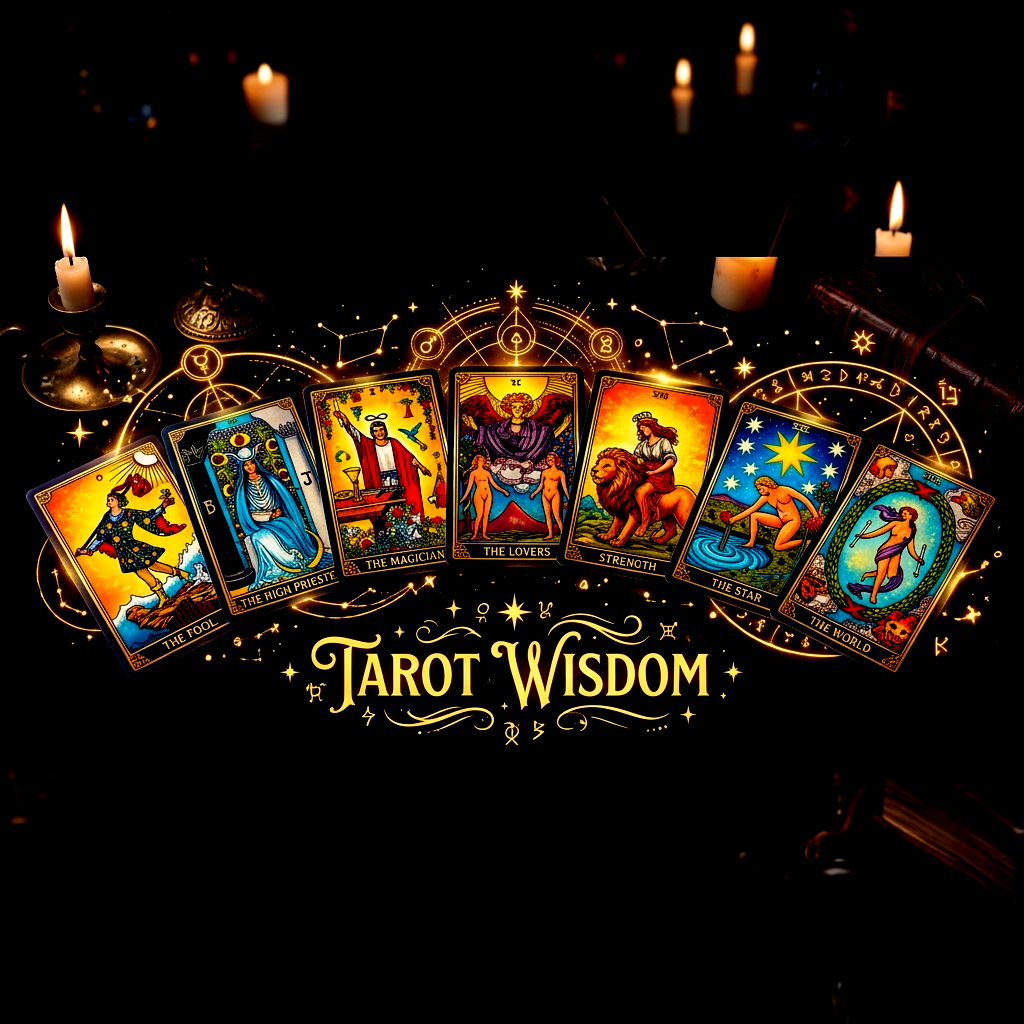
Tarot history is full of myths. Some say tarot comes from ancient Egypt, others trace it to the Kabbalah or the Gypsies. None of that’s true. Good stories, though. The actual history is less mystical but more interesting. It shows how a card game became one of the world’s most popular spiritual tools.
This isn’t the story people expect, there are no secret societies or hidden wisdom. There are playing cards, social changes, and a lot of creative thinking by people who wanted tarot to be older than it really was.
The 15th Century: Tarot as a Card Game
Tarot started in northern Italy around the 1430s. The first decks were called “carte da trionfi” – triumph cards. Rich families like the Visconti and Sforza commissioned custom decks as status symbols. These decks were hand-painted, expensive. Beautiful. They had the same Major Arcana structure the reader uses today, more or less.
The game played with these decks was a trick-taking game called tarocchi. Still played today in parts of Europe. The trionfi cards (now called the Major Arcana) were special cards that could beat other cards in gameplay. They were not spiritual, they were not divinatory. They were winning cards in a game. Depaulis in the History of Cartography journal confirms that early tarot decks followed the same production patterns as regular playing cards.
The four suits in early tarot were Swords, Cups, Coins, and Batons. These became Swords, Cups, Pentacles, and Wands in modern decks. The imagery changed over time but the structure stayed the same. Fourteen cards per suit. King, Queen, Knight, Page. Number cards one through ten.
Wait. Here is what most articles miss. Tarot wasn’t unusual in its time, many European card games used special trump cards. Tarot just happened to survive while others faded. Its survival hadn’thing to do with hidden wisdom and everything to do with cultural convenience.
The 18th Century: Occultists Reimagine Tarot
The thing is, For about 300 years, tarot was just a card game. Then the occult revival happened. Antoine Court de Gebelin, a French pastor and scholar, published a claim in 1781 that tarot contained ancient Egyptian wisdom. He was wrong. Egyptologists found no connection. But the idea caught on.
Court de Gebelin’s work sparked a wave of occult interest in tarot. Etteilla, a French occultist, created the first tarot deck specifically designed for divination. He also wrote the first guidebook for tarot reading. Before Etteilla, there’s almost no evidence that tarot was used for fortune telling. He basically invented the practice.
Here’s the thing, Eliphas Levi connected tarot to the Kabbalah, the Hebrew alphabet, and ceremonial magic. His work influenced every major occult tradition that followed. Levi never designed a deck but his writings shaped how tarot was understood. His claim that the 22 Major Arcana cards correspond to the 22 letters of the Hebrew alphabet is still repeated today, even though the historical evidence is shaky.
The Golden Dawn took tarot occultism to its peak. This secret society in late 19th century England developed complex tarot systems linking the cards to astrology, numerology, and alchemy. Members included famous occultists like Samuel Liddell MacGregor Mathers, Aleister Crowley, and A. E, waite. Karr in the Journal of the Western Mystery Tradition documented how the Golden Dawn’s tarot system became the standard for modern esoteric practice.
The Rider-Waite-Smith Deck Changes Everything
In 1909, Arthur Edward Waite commissioned artist Pamela Colman Smith to create a new tarot deck.
What made the Rider-Waite-Smith deck different, previous decks did not have illustrated Minor Arcana cards. The Ten of Swords was just ten swords arranged in a pattern. No scene. No story. Smith painted full scenes for every card. The Ten of Swords shows a figure lying face-down with ten swords in their back. The image tells the story instantly.
Smith wasn’t credited on the deck at first. The publisher, William Rider and Son, listed Waite as the author. Smith received a flat fee and no royalties. She died in poverty in 1951. Only in recent decades has she received proper recognition for her work. Many modern decks now credit her as Pamela Colman Smith.
The 20th Century: Tarot Goes Mainstream
Tarot stayed mostly within occult circles until the 1960s and 70s. Then the counterculture movement embraced it. Tarot became part of the New Age boom. Bookstores started carrying decks. Classes popped up. People who had no interest in the Golden Dawn started reading cards for insight and guidance.
The 1970s brought feminist readings of tarot. Authors like Vicki Noble and Mary K. Greer reinterpreted the cards through a feminist lens. Noble’s Motherpeace Tarot used round cards and female-focused imagery. Jungian psychology also influenced tarot interpretation, shifting focus from fortune telling to personal growth.
By the 1990s, tarot was everywhere, the internet accelerated this. Online tarot readings, digital decks, and communities of readers sharing interpretations. People who would never visit an occult shop could access tarot knowledge freely.
Tarot Today
Tarot now exists in multiple spaces simultaneously. Spiritual readers use it for divination and guidance. Therapists use it as a counseling tool, artists create decks as creative projects. Collectors buy decks for their art. Some people never read with their decks at all – they just enjoy the imagery.
The number of available decks is staggering. Thousands of decks exist. Hundreds more are published every year. The digital age made deck creation accessible to anyone with artistic skill and a crowdfunding campaign. Major publishers like Llewellyn and U.S. Games Systems release dozens of new decks annually.
Tarot interpretation has also diversified. Modern readers blend traditional meanings with psychological approaches, intuitive methods, and personalized systems. Strict adherence to “correct” meanings has loosened. Most readers now emphasize the reader’s relationship with the cards over memorized definitions.
Final Thoughts
Tarot history teaches an important lesson. The meaning of tarot changes across time. It was a game. Then a divination tool. Then a psychological mirror, then a creative medium. It will keep changing. The future of tarot will look different from its past.
That flexibility is tarot’s real strength.
Frequently Asked Questions
Is tarot really from ancient Egypt?
No. That myth started with Antoine Court de Gebelin in 1781. Historical and archaeological evidence shows no connection between tarot and ancient Egypt. The idea persists because it is romantic, not because it is true.
Who created the first tarot deck?
The first known tarot decks were created for the Visconti and Sforza families in 15th century Italy. These were hand-painted luxury items. The earliest surviving deck is the Visconti-Sforza deck from around 1450.
When did tarot become a divination tool?
The late 18th century. Etteilla published the first tarot divination system in the 1780s. Before that, there’s no reliable evidence of tarot being used for fortune telling or spiritual guidance.
Why is the Rider-Waite-Smith deck so popular?
Pamela Colman Smith illustrated every card with a full scene. Earlier decks showed simple patterns for the Minor Arcana. Smith’s artwork made the meaning of each card visible at a glance. This made tarot accessible to non-occultists and changed tarot reading forever.
How has tarot changed in the internet age?
Massive changes.
Did the Catholic Church ban tarot?
The Church has warned against tarot but never issued a universal ban. Some Catholic authorities consider tarot divination a form of superstition. Others ignore it entirely. Tarot’s status with the Church has varied across time and region. In practice, many Catholics read tarot without conflict.